Tuesday, September 28, 2010

Taco Bell hopes to spice up South Korea

On the day of Taco Bell's grand opening in Itaewon, the line  stretched 40 minutes outside.
On the day of Taco Bell's grand opening in Itaewon, the line stretched 40 minutes outside. (Courtesy Of Taco Bell)


Washington Post Staff Writer
Saturday, September 25, 2010; 8:48 PM

SEOUL - In South Korea, where talk of the border rarely involves dinner options, Taco Bell this summer opened a restaurant, its only one in Asia. But indeed, not its first.

Taco Bell had tried Asia before, and the pair didn't get along. The chain closed its two previous South Korean franchises in the early 1990s. It then pulled out of China in 2008, restoring Asia's reputation as a continent unconquered by the taco.

Taco Bell chose Seoul for its Asian re-launch, though, for a reason that has little to do with refried beans and sour cream. Seoul appealed to Taco Bell, executives say, because few cities on Earth can better turn a novelty into a mainstream obsession. In the time it takes for other countries to warm to a new product, South Koreans have already liked it, loved it, photographed it, blogged about it and waited in 30-minute lines for it for two weeks straight.

Far away from a customer base in the United States that knows the delights and agonies of late-night taco dining, paid for entirely with pocket change, Taco Bell seeks a higher level of trendiness in South Korea. The new store's menu appears on an LED board. Wall hangings display a succession of culinary mood words: sizzle, steam, smash.

Shin Sang Yong, chief executive officer of M2G Ltd., the company that brought the chain to South Korea, thinks Taco Bell can work here because "people are ready for something new. They've had 20 years of pizza and hamburgers." Shin envisions opening 30 South Korean franchises in the next three years. One hundred in the next six. Right now, Seoul has about 30 Mexican and Tex-Mex restaurants.

The city's three-story Taco Bell opened July 11, with 40-minute lines on the first day. Business in the first month exceeded projections by 20 percent, Shin said.

It remains to be seen whether Taco Bell will prosper here, or elsewhere in Asia, over the long term. Since Taco Bell last existed here 15 years ago, little has fundamentally changed in the way people eat. What's different is how they decide where to eat. In the world's most wired country, two of every five people, according to some estimates, maintain a blog. One of South Korea's preeminent search engines, Naver, has a special category for "powerbloggers," many of whom love writing about food. Taco Bell has held special events for these bloggers, hoping to win their approval.

"They can kill a company," said Paul Yang, general manager of M2G. "People here are very fast. One of the fastest places to pick up trends. They lead pop culture in Asia - ahead of Japan, ahead of Hong Kong."

Food trends in South Korea can start from almost anywhere. In the past few years, South Korea has had sudden love affairs with doughnuts, frozen yogurt and waffles.

The kebab craze started on a street corner in 2006, when Turkey native Omer Yilmaz sold his signature dish to a few fanatics, who spread the gospel. Soon Yilmaz had one store, then two more, and now there are many copycats.

This year, self-trained chef Suji Park - who had created a mini-empire of restaurants that taught South Koreans to love Western-style brunch - has her sights on starting a new trend, introducing South Koreans to piled-high pastrami sandwiches.

It is a cross-cultural truth that people like large quantities of sodium and fat, whether melted atop crust, sandwiched in a bun or stuffed in a tortilla. But Mexican food still faces some hurdles in Asia. Unlike other Yum! Brands franchises - KFC and Pizza Hut, in particular - Taco Bell has a limited international footprint, with just 250 stores outside the United States. Theories abound as to why Mexican food is a hard sell, but many food enthusiasts in Seoul say they think South Koreans are itching not just for Western food, but also for food that Westerners like.

"A crowd draws a crowd," said Daniel Gray, a Seoul resident and food blogger who offers Korean cooking classes and restaurant tours. "The fact that the foreigners start to go there, there's a huge line around the block - everybody sees that."

Taco Bell's menu, for now, is simple: burritos, tacos, nachos, quesadillas and other demonstrations of nacho cheese engineering, such as the Fries BellGrande, which consists of fries, sour cream, cheese and meat all layered together.

Yang says the restaurant might soon put up a sign showing newcomers how to properly eat a taco; so far, he has noticed South Koreans struggle to angle their heads, leading to a "taco at the wrong orientation," and spillage of ingredients.

Several young women sat on the second floor of Seoul's Taco Bell one recent evening, devoted equally to consuming and photographing their food. Jung Ji Yoon, a 20-year-old college student, said that she had eaten at Taco Bell several times this summer, finding the taste to be "good - especially compared to the price."

But Jung recently decided to go on a diet, meaning that on this particular night, she planned to use Taco Bell as a meeting spot only, ordering nothing. She brought a small packet of tofu instead.

Special correspondent Yoonjung Seo contributed to this report.

Monday, September 27, 2010

The end of the KBO Season for me.

Well I would liked to have said that the Hanwha Eagles had a great season. In the 20 games I went to see this season the home record was 6-14. When I saw the victory video after the last home game of the season, I could not remember the last victory that I had seen live.

This year did not start out good for the Eagles. Their 2 main stars Kim Tae-Kyun and Lee Bum-Ho both went to play for Japan baseball teams. Their closer, Foreign Baseball player, Brad Thomas, signed with the Detroit Tigers. This caused 3 big holes that the Eagles did not recover from.

This season they finished in last place. This was the 2nd year in a row that this had happened.

It will soon be March and maybe just maybe, we can have hope for a better season.

Sunday, September 19, 2010

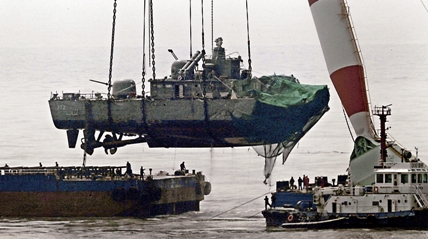
Investigation Affirms North Korea Attacked South Korean Ship

Author: Bruce Klingner

On September 13, 2010, South Korea released an extensive report detailing North Korea’s responsibility for an unprovoked attack on the South Korean naval vessel Cheonan. The 313-page report provides overwhelming, irrefutable evidence that Pyongyang deliberately sank the Cheonan with a torpedo launched from a submarine. Although North Korea’s motives for this act of war remain uncertain, the evidence is beyond doubt.

The report describes in minute detail the results of a five-nation, two-month long investigation. The report uses scientific methods to inextricably link Pyongyang to the egregious attack. The release of the lengthy document, more extensive than a preliminary version revealed on May 20, was necessitated by doubt sowed by swirling conspiracy theories, some of which blamed Seoul or Washington for sinking the South Korean ship.

The report delineates physical evidence showing that the damage to the Cheonan was the result of an underwater explosion and resulting ‘bubble jet’ caused by a torpedo underneath the ship. Interviews with crew members and coastal witnesses describe an explosion and resultant water plume consistent with torpedo explosions. Seismic and air acoustic wave analysis also point to a shockwave and bubble effect from an underwater explosion. Review of explosive residue, tidal currents in the vicinity of the sinking, and the recovery of parts of a North Korean torpedo preclude other possibilities, including an underwater mine.

Despite overwhelming evidence, there are those determined to remain unconvinced because it is inconvenient for them to admit North Korean culpability. South Korean progressives, who harbor a benevolent view of the North Korean regime, aggressively seek to undermine any threat to their advocacy for Seoul returning to a policy of providing generous unconditional benefits to Pyongyang. As such, they reflexively blame the United States or the conservative government of Lee Myung-bak as a means of diverting attention from North Korea’s bellicose threats, provocative behavior, and violation of international agreements and U.N. resolutions.

South Korean and U.S. progressives also advocate searching for “an exit strategy” from the Cheonan as if the attack that led to the death of 46 South Korean sailors was an inconvenience that should be swept under the rug. Fortunately, Seoul and Washington see little use in re-engaging Pyongyang until it addresses South Korean security concerns and makes tangible steps toward resuming implementation of its denuclearization commitments.

Current and former U.S. officials report that China did not want to confront the Cheonan evidence since it would put Beijing in an uncomfortable position it wished to avoid. Russia’s investigation, based on a cursory exposure to the Cheonan, was ideologically, rather than scientifically, driven.

Pyongyang’s attack on the Cheonan is consistent with previous North Korean acts of terror and war. North Korea has repeatedly attempted to assassinate the South Korean president, attacked U.S. ships and planes in international territory, and blew up a civilian airliner. In early 2009, the regime engaged in a series of provocative acts that made clear it had no intention of engaging with Washington despite euphoric expectations that the change in U.S. leadership would cause Pyongyang to moderate its behavior.

The Obama Administration responded to North Korea’s belligerency by pushing for punitive measures. Pyongyang’s attack on the Cheonan underscored North Korea’s unwillingness to abide by even the most basic concepts of international behavior.

Despite recent media speculation of a perceived softening of U.S. policy toward North Korea, the Obama Administration does not appear willing to reduce pressure tactics until Pyongyang alters its behavior. The U.S. recently announced new sanctions targeting North Korean entities responsible for the Cheonan attack and engaged in prohibited actions.

The sanctions were a welcome development since they are an effective means of upholding international law and U.N. resolutions by:

  • Signaling that there is a cost to abhorrent behavior;
  • Impeding North Korea’s development of nuclear weapon capabilities by constraining imports of components and material;
  • Curtailing Pyongyang’s destabilizing proliferation activities; and
  • Inducing North Korea to return to its denuclearization commitments.

However, the strategy was weakly implemented because the Obama Administration remains reluctant to target the other end of the proliferation pipeline. The U.S. should identify and target non-North Korean entities that are complicit in violating U.N. Resolution 1874 and aiding Pyongyang’s illicit activities.

Now that clear, comprehensive, and compelling evidence about the Cheonan attack has been disseminated, it is time to move beyond the inane conspiracy theories endlessly peddled by North Korean apologists. Instead, policymakers and the public should focus on North Korea’s continuing threat to peace and stability in northeast Asia and discuss the proper means to redress it.

Saturday, September 18, 2010

Gabriel Taylor Goshorn (2009-2010)

| Visit Guest Book

SHERMAN - Gabriel Taylor Goshorn, 15 months old, passed away Sunday, September 12, 2010 at Children's Medical Center in Dallas. Visitation will be from 6-7 p.m. Wednesday, September 15, 2010 at Bratcher Funeral Home, 401 W. Woodard St., Denison. Funeral service will be held at 10 a.m. Thursday, September 16, 2010 at Bratcher Funeral Home Chapel, with Rev. Cass French officiating. There will be a private family burial.

Gabriel was born May 28, 2009 in Savannah, Ga., the son of Samuel Goshorn and Meagan Wagoner.

He is survived by his parents Samuel Goshorn of Denison and Meagan Goshorn of Sherman; grandparents Harold and Kathleen Wagoner of Denison, Donald Goshorn of Denison, Carol Goshorn of Denison; great-grandparents Mildred Geostch of Denison, Harold and Sandra Wagoner of Sherman; brother Seth Goshorn of Durant, Okla.; sister Alyssa Goshorn of Durant, Okla.; uncle Taylor Wagoner of Denison.

Arrangements are entrusted to the care and direction of Bratcher Funeral Home, 401 W. Woodard Street, Denison. For further information, please call the funeral home at (903) 465-2323 begin_of_the_skype_highlighting (903) 465-2323 end_of_the_skype_highlighting, or for an online obituary, directions or to leave a condolence, please go to www.bratcherfuneralhome.com.


I WENT TO HIGH SCHOOL WITH HIS GRANDMOTHER. I Still can not believe this story.


Monday, September 13, 2010

The Fall 2010 Film Preview

by Mike McStay

Here are my recommendations of films that you need to see this fall and the films that you need to pass on.

The films that you need to see this fall

The Town- When I saw the preview, it looked great and the idea of a bank robber being this crass just sounded like a film that I would want to see if it ever comes here to Korea.

Let Me In- Now I was a huge fan of the original “Låt den rätte komma in” from Sweden. I really could not believe that they were going to remake it. I have heard mixed reviews about this film but I just have a feeling that this could be a good film.

Life as we know it- I have usually hated any film that Katherine Heigl has starred in but this one just looked different and it has the possibility of being a great film, if given the chance.

Red- When I saw who was going to be in this film Bruce Willis, Morgan Freeman, John Malkovich and Helen Mirren, I knew that this was going to be a film that I really wanted to see and make them all ex-CIA and I really want to see this.

Hereafter- Real simple, Clint Eastwood Directed this film. I hope it’s another good film from him.

Monsters- What do you do when aliens invade the world and they soon establish a colony in Mexico. Then you have to go there and get someone out alive. It sounded interesting to me and I want to see it.

Due Date- it sure looked like an updated version of Planes, Trains and Automobiles. It made me realize how much I have missed John Candy’s acting. The parts I saw made me laugh, so I will give it a chance.

Unstoppable- When I saw that Denzel Washington and Chris Pine were in a film directed by Tony Scott and with a train that could collide into dangerous chemicals, it just sounded very interesting.

Skyline- When Aliens appear and a huge blue light is making people disappear, it reminded me of a classic Twilight Zone episode. It looks like a different idea for a film.

Harry Potter 7 Part1- Unless the film makers really make huge mistakes with this film, this should be a huge blockbuster and in 3D IMAX. They should make a lot of money worldwide on this one.

The Next 3 Days- I saw Russell Crowe and Liam Neeson on the screen together, I knew that this would be a film that I wanted to see.

The Fighter- This film takes a look at the start of pro boxer “Irish” Mickey Ward career so they will not be showing his classic trilogy with Arturo Gatti.

Tron :Legacy- I was never that huge of a fan of the first film but I am willing to give this film a chance based on the good preview that the film has received so far.

Yogi Bear- Ok, I loved Yogi as a cartoon and I will go see it as a movie. I sure hope I don’t regret this selection as a film to see this fall.

Now for the films that you need to run away from and miss when they come to the movie theater.

Machete- Now I do really love a good Grindhouse type film. Sad to say this one was so way over the top and with the Anti-Arizona Immigration message, the film never worked for me and that is a shame.

Wall Street 2- So it’s 20+ years later and now Greed is evil or is it good or why should I care. The preview looked horrible and how long has it been since I have actually paid to see a film Directed by Oliver Stone.

The Social Network- The Buzz is bad on this film and the closer it get to its release date the worse the film sounds to me.

Stone- The preview looked like a very cheap late night film that you see on the USA Network and it just looks and feel more like a TV film that a real one.

I spit on your grave: unrated- I have no idea why they are remaking this film. The original one was badly acted and this one doesn’t look any better.

Paranormal Activity 2- I thought the first one was pathetic and with the 2 different ending, it just made a bad film into a joke for me but the film made a lot of $$ so here comes part 2.

Saw 7 3-D- Didn’t Jigsaw die a few films ago and no he is back and in 3-D? Why?

Megamind-This carton just looks bad and I didn’t laugh once during the preview. I can vaguely remember that Will Farrell films were supposed to be funny.

127 hours- So we see a man with his arm stuck under a rock for how many hours? This is a good film because why?

The Tourist- I have no idea why they made this film after so many cast and other changes to the original story. It just has a very bad feel to this film.

Little Fockers- Why are they making this film and now we see a preview that Ben Stiller is trying to be “The Godfather” it makes no sense and it wasn’t funny at all.

True Grit- You’re trying to remake a “John Wayne” film. Didn’t you learn your lesson with the failure of The Ladykillers” remake.

Gulliver’s Travelers- Now Jack Black is trying to be a giant in this film. I really cannot believe that they cast him in this role. Please go back to a panda role instead of this one.

Saturday, September 11, 2010

First Person: The shared stories of 9/11

Fri Sep 10, 4:43 pm ET

"Wake up. The World Trade Center is gone."

That's how Sept. 11, 2001, started for Gwen Navarrete. And maybe for you, too.

The shared nature of the tragedy both broke and — paradoxically — strengthened the heart of a nation.

So we've asked people like you to share again, nine years later. In a collaboration between Yahoo! News and Associated Content, we've gathered reflections from people across the country about what they went through and what they learned (or didn't) from that terrible time. "Our day of infamy," contributor Melissa Danysh calls it. She's just one of the many we heard from.

And here's just a sampling of what they had to say.

An aid worker has to step back

Not all of the people affected by the Sept. 11 attacks were in New York and D.C. In Norfolk, Va., where I worked for the American Red Cross, the local schools shut down and children were sent home. Two hours after Flight 77 crashed into the Pentagon, I answered a call from a 12-year-old girl during my shift.

Her voice shook with fear. Sniffles came through the line and my own eyes misted. Both of her parents worked at the Pentagon. She couldn't reach them.

When the call ended, I shared her information with the volunteers answering the phones. I waited at the office for her call until I was ordered home to rest. At 5 a.m. I returned to find myself being hugged by two volunteers, as they told me the girl's mother called. She and her husband had escaped the disaster without injury.

For those brief seconds, there was joy in hell.

The bond forged during a disaster between relief workers is different from any other type of friendship. Back then, I watched and prayed for safe journeys as my friends headed out to help. When most Americans struggled to find something useful to do, we knew what was needed and we did it.

It's easy to burn out when doing volunteer work, especially in disaster services. Often, people remember to complain but forget to express their gratitude. I never burned out, but I did grow to understand that my future meant deciding between my wants and my family's needs. … [J.S. Nichols' story continues here.]

[The account above and all the others that appear here are edited excerpts.]


A Muslim high-schooler's bewilderment

I was a senior in high school. I remember my teacher immediately turned on the television. The first thing I saw was the media showing a group of Muslims celebrating the attacks. I got a sick feeling in my stomach and I began to cry.

I am an American Muslim. The terrorists who called themselves "Muslims" took responsibility for the attacks and because of that, my life has changed ever since.

I was born and raised in the small town of Kingston, Pa. There, little or nothing was known about Islam. My high-school principal did not know much about Islam -- only that he had three Muslim senior girls in the school who wore head scarves. Before 9/11, we were accepted by all in our school. Students were interested in learning about Islam and accepted our traditions and religion. However, with 9/11, I saw an extreme change.

It started with the day of the attacks. My principal gathered me and the other two Muslim girls and told us to go into the library for our own safety. I was very scared. I didn't do anything wrong and did not understand why I would be targeted. I am American, I thought, and I am affected by the attacks as well.

I used to have a bumper sticker on the back of my little white Honda Civic with the sign of Islam (a crescent and star) stating that "I Love Islam." When I got home from school on Sept. 11, my mom was waiting outside and told me to get rid of the sticker.

Since the attacks, I have experienced much harassment. While I walk down the street, I've heard people scream out their windows for me to go back to where I came from. On Memorial Day this year, I was walking my son when a man screamed those exact words from his car. I fear that my child will have to grow up with this prejudice simply because of one tragic day in America. … [M. Mahmoud's story continues here.]


A warrior's internal struggle

From the start of Operation Enduring Freedom in October 2001 to the time I separated from the military in 2007, I would ultimately spend nearly three years in Iraq, Afghanistan, Qatar and Saudi Arabia to help to execute the war on terror.

Like everyone else, I struggled with hate and fear as we were plunged into war. While I think I was able to ultimately turn away from those more corrosive emotions, I struggled with them for years.

When al-Qaida terrorists first attacked the World Trade Center, I was a young lieutenant serving on a base in the Middle East, preparing to go on shift at the Watch (part of the effort monitoring Iraq's compliance with the United Nations' Southern No Fly Zone). While my teammates and I ate in the dining facility, the images of smoke coming out of the first tower started broadcasting across the large-screen TVs.

The next few hours are still vivid in my memory. At once, dozens of soldiers, sailors and airmen leaped up and charged out of the facility. We jumped into our vehicle and raced to the Watch. Upon arriving, we were greeted with a human tempest as men and women surged throughout the building, desperately trying to assess the attacks. While we stood there getting our bearings, a captain called out to us: "They hit the Pentagon!" and then he disappeared into the maelstrom. I bolted to my station to join the new war. … [W.E. Linde's story continues here.]


For a pilot's family, 'a strange sort of guilt'

As the reports unfolded, my husband, a pilot for American Airlines since 1991, and I tried to sift through the jumble of facts and theories pouring from various networks. There was a sense of disbelief in the house, and our dog paced between us in an effort to offer comfort. As information became clearer, we were sickened by the knowledge of the loss of an American Airline airplane in this tragedy, stunned to hear of another hitting the Pentagon. Added to our agony was the loss of United Airlines' two jets; the death of so many crew members and passengers in such a short period of time was beyond comprehension. What was happening to our world?

In the past few years, our has life returned to normal -- or, rather, the "new" normal. Gone are the days when aviation travel was considered an adventure, replaced by long lines at the more vigilant and intrusive security check-points and passengers looking at fellow travelers with distrust. Once my husband's passion, flying is now a grueling and difficult job filled with tension and added layers of security and responsibility.

Despite the financial and work difficulties, the hardest thing to face has been our feeling of guilt. Why wasn't Mark in the cockpit? Could he have changed anything? Probably not, but the question still lingers as my husband and I share a form of survivor's guilt with other airline employees and their families. It is a strange sort of guilt. … [Susan Ranstead's story continues here.]


30 miles from Afghanistan

My sister was not in Michigan with me. She was not in Chicago with her friends. She was not in Tennessee with our mom. She was 30 miles from the Afghanistan border. I was terrified. I didn't care if the world was coming to an end; I could handle that. I just wanted my sister home with me.

My sister works for international aid organizations and travels the world to help after natural disasters. On Sept. 11, she was working in Turkmenistan, just north of Afghanistan, helping to distribute food to TB patients. She had no idea what had happened. News is not exactly instantaneous there.

I don't think it was real for her because she was so far away. TVs are few and far between, so it wasn't until much later in the evening that she was able to go to another expat's home and see the horror for herself on CNN.

The aid organization she was working for at the time was concerned, but it did not feel the need to remove their workers. The area was very remote and the likelihood of that particular small group being attacked was slim. They were, however, to stay on alert and be ready to move if the situation worsened. It was sheer agony for me.

People who know my sister are always amazed she does this for a living. One friend says my sister is living the life she always wanted. I thought it was a kind of cool, too. Until Sept. 11. … [Lisa Pratto's story continues here.]


A hard-won unity that has faded again

On the morning of Sept. 11, 2001, I sat stunned in my Baltimore hotel room as I watched the first World Trade Center tower collapse.

We reported to the airport for our flight back with no idea if we would be allowed to fly. The Baltimore airport had the longest lines of would-be travelers queued up that I have ever seen in any airport anywhere. Behind me was Rep. James Leach (R-Iowa).

I ran through several of the ways to help that I had considered during my sleepless night. I asked for Rep. Leach's reaction to my list. "You're way ahead of me," he laughed.

My partner, Chris, who had heard my idea of holding a "Celebrate Citizenship" sing-along fundraiser to collect money for the families of the victims of the WTC bombing, said, "You should ask Jim Leach if he would speak."

I literally ran the length of a long airport corridor and extracted his bemused promise that, yes, he would speak at such an event.

So we set about making the "Celebrate Citizenship" idea into a reality, mounting a fundraiser to collect scholarship money for the children orphaned by the WTC bombing. Our corporate parent company had promised to match any money raised.

We selected Veterans Day, Nov. 11, 2001, exactly two months from the date of the tragedy. Many from the Quad Cities of Iowa and Illinois pitched in to help. The best junior high band in the state of Illinois (Glenview Jr. High of East Moline) played. All three nearby TV networks sent speakers. The (Moline, Ill.) Daily Dispatch pitched in with free flyer distribution, and columnist John Marx spoke.

Rep. Leach drove 120 miles from Iowa City after giving four other speeches to serve as our keynote speaker. Happy Joe Whitty of the local Happy Joe's pizza franchise talked about tolerance; his son-in-law is a Muslim. We sold red, white and blue popcorn, Krispy Kreme donuts, ice cream, patriotic items and accepted donations.

"Celebrate Citizenship" on Nov. 11 was a time of unity and one of the last times that it appeared that we were all pulling together to bring our country together. … [Connie Wilson's story continues here.]

Remembering 9/11 and the Night at Shea Stadium That Brought Everyone Together

By Steve Phillips


The morning of September 11, 2001 started a bit overcast. I left home at my normal time but anticipated a very busy day at work because I had organizational telemeetings scheduled for the entire day. Every Mets minor league club had its own time window in which we were going to discuss each player in the organization and their progress over the minor league season. The big league club was on the road in Pittsburgh.

Normally I would listen to any number of radio stations on my drive into work. As I was approaching the Bronx-Whitestone Bridge, which links the Bronx with Queens, I heard on a news station that a plane had hit one of the towers of the World Trade Center. The speculation was that it was a small commuter plane. As I went over the bridge I could see the city skyline and smoke billowing off what I supposed was the first tower.

I called my wife to tell her what I heard and saw and asked her if she had seen anything on TV about it. She hadn't but was going to check after we got off the phone.

Then as I got close to Shea Stadium my wife called back and told me that a second plane had hit the other tower at the World Trade Center. She said that at that point the speculation was that it was a terrorist attack. A terrorist attack!

I remember getting goose bumps all over and feeling a deep pit in my stomach.

As I pulled into the stadium and got to the offices the word was just spreading as to what had happened. People were flipping on televisions and trying to find out what they could.

I called my wife back again and she said that she heard at some point they might shut down the bridges and suggested I get home before I got stranded. That fit with what I wanted so desperately to do. I just wanted to get home and get my kids out of school and home safely.

I canceled the telemeetings for the day and told everyone in the baseball department that they could leave to go home to their families. I hustled out of the stadium to my car and headed home, getting over the bridge before it was closed. I could see the smoke from the towers even more clearly now.

As I drove home for the next hour and a half, news followed that the Pentagon had been hit as well. Then the news that the towers collapsed. Oh my gosh ... the towers actually collapsed.

On my drive I had called our PR Director who was with the team in Pittsburgh. Obviously all of the players were concerned about their families. I understood that because all I wanted to do was to get home. We told everyone to sit tight and we would get word from MLB about what was going to happen. Obviously all air travel had stopped so we weren't going to be flying the team home from Pittsburgh.

The next couple of days were horrible, as many people we knew were touched in some way by the tragedy. Our town had lost five men. They had been fathers, sons, brothers and friends. They were Little League coaches and soccer coaches. They were real people that we all knew who were casualties of a war we didn't know was going on at the time. It was so, so sad. It still is.

It was also scary. We didn't know what else might happen. We figured that the people who had done this might strike again. We just wanted to hunker down and hide until someone said the coast was clear.

Games were initially canceled for one day, then three days and then later it was announced five days. The players ended up busing back from Pittsburgh and those who hadn't already reconnected with their families were able to do so. We scheduled workouts at Shea Stadium while we awaited word as to when the Commissioner thought play should resume. There were some who thought that maybe the season should go unfinished. I would have completely supported that.

We were at war!

We didn't know what else might happen. We figured that the people who had done this might strike again. We just wanted to hunker down and hide until someone said the coast was clear.
Shea Stadium became more than a place for ballgames. It became a staging area where supplies were collected for those working at Ground Zero on what was originally a rescue mission and then a recovery mission and then a cleanup mission. Firefighters and policemen from around the country traveled to New York to help. There were rows of cots set up in the tunnels of the stadium for crews to come back and rest between shifts.

Upon their return from Pittsburgh we gathered the players at Shea Stadium for a meeting to give them some sense of the plan. Our owners were there as well as my entire front office and all of the players. The owners talked about how we needed to all stick together in this scary time. The owners also committed to making a hefty donation on behalf of the organization to the families that lost policemen and firemen in the tragedy. Our players did the same, committing a day's pay each, totaling about $450,000.

I will never forget at that meeting a young rookie catcher, Vance Wilson, stood up in the meeting and said that he didn't want to hear any more whining about how this impacted the team or their travel. He said he heard some grumbling on the way back from Pittsburgh. He reminded everyone that people lost family members; none of us had anything to complain about. Pretty impressive for a rookie.

When we worked out at the stadium we invited the firemen to come out on the field to meet the players and take some swings. The players spent hours helping load vans and trucks with supplies to be delivered to the city. Some players went to Ground Zero to offer moral support to the workers there. It was somber. It was serious. It was sad.

It certainly put baseball in perspective. It put a lot of things in perspective. It pulled a team together, a city together and a country together.

Bud Selig decided the games would go on and play resumed on September 16. We went back to play a series in Pittsburgh. The Pirates' fans cheered for us. It was stunning, shocking, moving. It made me proud to be an American. Everywhere we went people cheered us because we were truly representing the name on the front of the uniform.

NEW YORK.

When they cheered for us they were cheering for our firemen and policemen who ran toward the World Trade Center while others ran for their lives. Our players wore the hats of the NYPD and the FDNY with pride and respect.

On Friday, September 21, we came home and were scheduled to play the first game back in New York since the attack on the World Trade Center. The entire time the team had been away the preparations were being made for its return to Shea. I went to meetings with the NYPD, FBI and FDNY and our stadium operations staff. I would listen to all of the precautions that were being put in place: metal detectors, police presence, snipers, radiation detectors, bomb-sniffing dogs. You name it and it was discussed and likely implemented.

Honestly, it scared the crap out of me.

Was playing a baseball game under these conditions really worth it?

I mean, we had to instruct the players and their families what to do if there was an attack. We had an evacuation plan for family members that would bring them through the bowels of the stadium and connect them with their husbands and fathers in the player parking lot for a quick getaway if necessary.

Just as there were preparations being made for the safety and security of the fans, so, too, were preparations being made for the "event" that the game would be. It needed to be respectful, spiritual, patriotic and New Yorkish.

I spent most of the day of September 21 in my office confirming the final safety and security plans as well as trying to focus on some baseball stuff. It was hard to focus. I was scared. There was a story that had circulated that a man had been found sitting in his car with maps of the area around Shea Stadium and LaGuardia Airport. He supposedly had certain things highlighted that worried the authorities. I didn't know what to make of that.

In the late afternoon I had to get out of my office so I went up to my box from which I would watch the game. I was sad and wanted to be alone. I looked down on the field and there was a gospel group getting set up to rehearse with Diana Ross. They were to sing "God Bless America" during the seventh-inning stretch. I sat there as they prepared wondering what the night would bring. I didn't know whether the stadium would be a target for the terrorists so soon after the 9/11 attacks. I wondered how many people would show up for the game. I wondered if life would feel this scary forever.

Then they started to sing. Diana Ross and these kids started to sing "God Bless America." I watched as Ms. Ross sang with passion and truth. She went from person to person and touched each singer's face with a gentle touch, letting them know they were safe. She looked in each of their eyes and made it clear that they were all going to be OK.

I sat there in my box where I had screamed at my players and manager on many occasions. This was the place where I had pounded the tabletop at ridiculous calls by umpires. This is the box in which I had slapped high fives just a year prior on our way to a World Series. And now I was sitting and crying. I was crying for all those who had died and for how much life had changed in just a few days. It was one of the most spiritual moments I have ever experienced.

When they were done singing I felt better. I just felt like everything was going to get better. Somehow, someway, someday.


The game started with a bagpipe performance that truly touched my soul. It spoke to the anguish and grief of the recent events and brought tears to most eyes. Rudy Giuliani, mayor of New York and a huge Yankee fan, was in attendance and was cheered wildly by everyone to honor his leadership during the adversity that hit New York.

Our arch-nemesis, the Atlanta Braves, were the opponent. Before the first pitch both teams shook hands and hugged, acknowledging the obvious: that the rivalry really didn't mean nearly as much on September 21, 2001 as it had just 11 days earlier.

Marc Anthony sang the National Anthem. He sang it with passion and sincerity. The fans sang along like I had never heard before. Chants of "USA! USA! USA!" followed. I got goose bumps.

The game itself was a good one. The Braves started Jason Marquis, a New Yorker. He threw six innings and only gave up a run. Bruce Chen started for us. He matched Marquis, allowing only one run over six innings. An emotional John Franco, a New Yorker as well, gave up a run in the seventh that gave the Braves a 2-1 lead after seven innings.

The seventh-inning stretch included the performance of "God Bless America" that I saw before the game. The fans appreciated it as much as I did. Then Liza Minnelli came out and sang "New York, New York." She was arm and arm with policemen and firemen while doing a cabaret kick during the song. It was a powerful and dramatic performance.

After we made our third out in the seventh inning, still trailing 2-1, I remember saying a prayer asking God for help. I was never one to pray for victories because I always felt like God had more important prayers to answer.

But this just felt different.

There were 41,000 people that had the courage to show up and support the Mets, New York and America. It just seemed that the scriptwriters should have us win the game. I really didn't think the Braves would mind if we won. I even mentioned that to God.

Well in the bottom of the eighth inning, after an Edgardo Alfonzo base on balls, Mike Piazza came to the plate. Piazza was beloved by Mets fans. He was a clutch player who loved the big moment.

I can still slow down the image in my mind. As Braves reliever Steve Karsay -- born in Flushing, Queens -- released the ball and it came to the plate Piazza started to uncoil his swing. My prayers and the prayers of 41,000 Mets fans and 8.4 million New Yorkers were answered as the ball sailed out of the park. I can still see Piazza rounding the bases. I can see him acknowledging the fans.

I cried yet again.

We won! Yes, we won the game, but it was more than that. We won because we overcame adversity. We stood up to our fears and anxieties. New Yorkers showed up and said, "Bring it on!" I was proud to be a Met that day. I was prouder to be a New Yorker and I was proudest to be an American.

We will never forget September 11, 2001.

I will never forget September 21, 2001, either, because that is the day I knew we were going to be all right.

Thursday, September 09, 2010

20 More Things Your Child's Teacher Won't Tell You.

1. My rule for hormonal middle-schoolers: Keep your hands where I can see them.

2. My first year of teaching, a fifth-grader actually threw a chair at me. I saw him recently, and he told me he just graduated from college. That’s what makes it all worthwhile.

3. I have parents who are CEOs of their own companies come in and tell me how to run my classroom. I would never think to go to their office and tell them how to do their jobs.
20 More Things Your Child's Teacher Won't Tell You
©2009 Jupiterimages Corporation
"Teaching is a calling. There’s not a teacher alive who will say she went into this for the money."
4. We don’t arrive at school 10 minutes before your child does. And we don’t leave the minute they get back on the bus. Many of us put in extra hours before and after school.

5. We are not the enemy. Parents and teachers really are on the same side.

6. The truth is simple: Your kid will lie to get out of trouble.

7. Encourage your child to keep reading. That’s key to success in the classroom at any age.

8. We can tell the difference between a parent helping their child with homework and doing it for them (especially when they’re clueless in class the next day).

9. Teaching is a calling. There’s not a teacher alive who will say she went into this for the money.

10. Just because your child says he did his homework doesn’t mean it’s true. You must check. Every night.

11. Teaching is not as joyful as it once was for many of us; we get jaded too. Disrespectful students and belligerent parents take a toll on us.

12. Parents give their kids the pricey gadgets and labels, but what kids really crave is for you to talk to them. They want to know you are interested in their lives.

13. We spend money out of our own pockets to buy things our students need, such as school supplies and even shoes.

14. Supportive, involved parents are crucial. But some are “helicopter parents”--they hover too much.

15. Having the summer off is great, but many of us have to take on extra jobs--teaching summer school, tutoring--to make ends meet.

16. Success is not achieved by just making kids memorize flash cards and prepping them for an Ivy League school. Sensible parents know there is a college for every kid, and that responsibility and good citizenship are what really drive success.

17. Nobody says “the dog ate my homework” anymore, but we hear a lot of “I left it on the kitchen table.” And then Mom will send in a note to back up the story.

18. We wish parents would make their kids own up to their actions instead of pressuring us to bend the rules.

19. Please stop doing everything for your child and allow them to make mistakes. How else will they learn? Kids are not motivated to succeed because they feel their parents will bail them out every time.

20. There are days when I just want to quit, but then that one smile from that one kid, changes it all.

Sources: American Federation of Teachers; interviews with elementary and middle school teachers in California, Connecticut, Georgia, Iowa, Minnesota, New York, and Texas.


A look inside a teacher's mind could help you understand lesson plans and maybe even guide your child to perform better.

1. If we teach small children, don’t tell us that our jobs are “so cute” and that you wish you could glue and color all day long.

2. I’m not a marriage counselor. At parent-teacher conferences, let’s stick to Dakota’s progress, not how your husband won’t help you around the house.

3. We’re sick of standardized testing and having to “teach to the test.”

4. Kids used to go out and play after school and resolve problems on their own. Now, with computers and TV, they lack the skills to communicate. They don’t know how to get past hurt feelings without telling the teacher and having her fix it.

5. When I hear a loud belch, I remember that a student’s manners are a reflection of his parents’.

6. Your child may be the center of your universe, but I have to share mine with 25 others.

7. Please help us by turning off the texting feature on your child’s phone during school hours.

8. Guys who dribble a ball for a couple of hours a game can make up to $20 million a year. We educate future leaders and make about $51,000 a year.

9. We take on the role of mother, father, psychologist, friend, and adviser every day. Plus, we’re watching for learning disabilities, issues at home, peer pressure, drug abuse, and bullying.

10. Kids dish on your secrets all the time—money, religion, politics, even Dad’s vasectomy.

11. Please, no more mugs, frames, or stuffed animals. A gift card to Starbucks or Staples would be more than enough. A thank-you note: even better.

12. We love snow days and three-day weekends as much as your kid does.

13. The students we remember are happy, respectful, and good-hearted, not necessarily the ones with the highest grades.

Monday, August 30, 2010

Updates to urgent need for B- blood in Gwangju.

By now news of Michael Simning has probably reached you on Facebook. Mike---owner of Gwangju's Underground Grocers and The First Alleyway, host on GFN 98.7 FM, a "beacon of Gwangju's foreign community," husband, father, and all-around great guy---was diagnosed with leukemia and is in urgent need of B- blood, a type especially rare among Asians. Reaching out to South Korea's diverse expatriate communities to find matches is of utmost importance.

There are restrictions imposed by the Korean Red Cross on who can donate blood---impositions found throughout the world---something learned earlier in the year during another blood drive in the expat community, and written about by Roboseyo in an important post in April and summarized again last week.
The donation eligibility form is the same at any red cross clinic worldwide:

Take a look at this document. Read it carefully.
These two documents'll help you determine your eligibility.

In this article, and this one, I was told you need to meet these requirements to donate blood in Korea:
1. You need to have an Alien Registration Card. Bring it, and be ready to present it.
2. You need to have been in Korea for a year.
3. You need to be able to answer some questions about your medical history... mostly the ones inthose two documents above... the guy at the Seoul Global Center, when I called in April, was pretty sure that you need to speak enough Korean to answer the medical history questions yourself, but when I went in person, the nurse did allow me to answer the questions through an interpreter. Some of the questions made my translator feel awkward -- "have you shared needles"? But if you can help save a guy's life, it's worth it, right?

Michael's friend Hughie Samson has collected information via Facebook and sent out an update, including information about how to find out your blood type, what to say in Korean at the clinic or hospital, and what else you can do to help:
A few days ago Michael Simning - an expat in Gwangju - visited the hospital because he wasn't feeling very well.

He discovered that he has leukemia, was admitted into the hospital immediately (where he will stay for at least a month), and has started to undergo chemotherapy treatments.

As part of his treatment Michael needs to receive several blood transfusions.

Michael's blood type is B-, which is very rare, and so he, his family, and his friends are trying to find people in Korea who can donate blood to him immediately as well as periodically throughout the next couple of weeks. (O- blood won’t work in this case.)

If your blood type is B-, and you are able and willing to donate, please consider contacting Tim Whitman at 011.9600.6378 or tugrocers@gmail.com. Tim will pass your name and phone number along to Michael and his family.

You can also help by passing this message along to friends of yours here in Korea too.

Many people -- unfortunately -- don't know their blood type. You can find out yours -- and at the same time find out if you can help Michael -- by visiting a hospital in your area.

The procedure is relatively painless and should only take a few minutes.

In case you’re worried about communicating with the staff, you can print out and show them the following information, which explains to them why you’re there and why you need this information:

친구가 백혈병에 걸려서 도움이 필요합니다.
제 친구는 Rh-B 형 입니다.
제 혈액형 검사받고 하고 싶습니다. Rh-/Rh+ 인지까지 정확히 검사 받고싶습니다.

Once you find out your blood type, and if it is B-, you can do the same as those who already know theirs: contact Tim Whitman at 011.9600.6378 or tugrocers@gmail.com.

In the meantime Michael’s immune system is very weak so he isn’t able to receive any visitors. He is able to communicate using the internet and telephone, however, and many friends have been wishing him well using Facebook.

And as a side note from me, a friend: Mike’s sickness and rehabilitation may cause a lot of financial strain to him and his wife and daughter, so if you are in Gwangju, please consider supporting him in a very direct manner by shopping at the Underground Grocers and by eating at the First Alleyway, both of which will remain open in his absence.

Underground Grocers is open on Wednesday from 11 to 7, on Thursday and Friday from 1 to 7, and on Saturday and Sunday from 12 to 7; the First Alleway is open Wednesday to Saturday from 5 to 10ish and on Sunday from 11 to 5 for an all day breakfast.

For people eager ot know what else they can do to help, mutual friend Jessica---in another Facebook message---reiterates that people in the area continue to shop at the Underground Grocers and The First Alleyway. People staying away because they mistakenly think the two are closed can raise more money for Michael and his family by their continued patronage.

Friday, August 27, 2010

I love this Doctor!


Q: Doctor, I've heard that cardiovascular exercise can prolong life. Is this true?

A: Your heart only good for so many beats, and that it... Don't waste on exercise. Everything wear out eventually. Speeding up heart not make you live longer; it like saying you extend life of car by driving faster. Want to live longer? Take nap.

Q: Should I reduce my alcohol intake?

A: No, not at all. Wine made from fruit. Brandy is distilled wine, that mean they take water out of fruity bit so you get even more of goodness that way. Beer also made of grain. Bottom up!

Q: How can I calculate my body/fat ratio?

A: Well, if you have body and you have fat, your ratio one to one. If you have two bodies, your ratio two to one, etc.

Q: What are some of the advantages of participating in a regular exercise program?

A: Can't think of single one, sorry. My philosophy is: No pain...good!

Q: Aren't fried foods bad for you?

A: YOU NOT LISTENING! Food are fried these day in vegetable oil. In fact, they permeated by it. How could getting more vegetable be bad for you?!?

Q
: Will sit-ups help prevent me from getting a little soft around the middle?
A: Definitely not! When you exercise muscle, it get bigger. You should only be doing sit-up if you want bigger stomach.

Q: Is chocolate bad for me?

A: Are you crazy?!? HEL-LO-O!! Cocoa bean! Another vegetable! It best feel-good food around!

Q: Is swimming good for your figure?

A: If swimming good for your figure, explain whale to me..

Q: Is getting in shape important for my lifestyle?

A: Hey! 'Round' is shape!


Well... I hope this has cleared up any misconceptions you may have had about food and diets.

And remember:

Life should NOT be a journey to the grave with the intention of arriving safely in an attractive and well-preserved body, but rather to skid in sideways - Chardonnay in one hand - chocolate in the other - body thoroughly used up, totally worn out and screaming "WOO-HOO, what a ride!!"


AND.....

For those of you who watch what you eat, here's the final word on nutrition and health. It's a relief to know the truth after all those conflicting nutritional studies.

1. The Japanese eat very little fat and suffer fewer heart attacks than Americans.

2. The Mexicans eat a lot of fat and suffer fewer heart attacks than Americans.

3. The Chinese drink very little red wine and suffer fewer heart attacks than Americans.

4. The Italians drink a lot of red wine and suffer fewer heart attacks than Americans..

5. The Germans drink a lot of beer and eat lots of sausages and fats and suffer fewer heart attacks than Americans.


CONCLUSION:

Eat and drink what you like.
Speaking English is apparently what kills you.

Monday, August 23, 2010

Movie Review: Predators (2010)

When I heard that they wee going to make a new Predator film, I only had one question in my mind, Why? After seeing this film, I still have the same question, Why was this film made?

All the film is really about is that humans are now being sent to a planet where it is man vs. Predator to see which one is the best hunter/killer. It does nothing to set up why or anything, Its just you're dropped into combat and you die.

The casting of Adrian Brody as the hero of this film was a joke. I never believed him for a moment and the other actors seemed liked they wanted to be somewhere else than trying to make this film.

The only time I actually liked the film is when it was over and I could not believe that someone actually said that this was a good film.

Please pass on this film at all cost when it opens here in Korea on AUG. 26TH 2010

Grade: D-

Edwin
: Excuse me, I'm - just what the hell is going on here?
Royce: We're being hunted. The cages, soldier, all of us. We were all brought here for the same purpose. This planet is a game preserve, and we're the game. In case you didn't notice, we just got flushed out. They sent the dogs in. Just like you would if you were stalking boar, shooting quail. They split us apart and they watched. Testing us.
Isabelle: How do you know this?
Royce: Because, that's what I would do.


Movie Review: The Expendables (2010)

Now I really had no idea what to expect in this film. The previews looked great and the film has a scene with Sylvester Stallone,Arnold Schwarzenegger and Bruce Willis all together is what sold the film for me. I am glad that I saw this film because it was a great summer blockbuster type of film.

The film is basically a throwback film in which Dolph Lundgren described it as "an old-school, kick-ass action movie where people are fighting with knives and shooting at each other." What I liked about it that there was actually a bad guy and the good guys were fighting to try and save some people's lives.

The film is definitely a popcorn film, in which the story is OK, the plot is OK and when it hits the fan, you know that you are going to be a world of a good time at the movies.

But the part of the film that I really loves is when Stallone, Schwarzenegger and Willis were all in the film at the exact same time, the jokes and the plot telling were just classic and the little subtle jabs at each person past acting roles and maybe future jobs was just too funny and really needs to be extended if there is a part 2 for this film.

This film will never win an Oscar but if you see it you might actually be surprised when you like it.

Grade: B

Trench: Give this job to my friend here. He loves playing in the jungle, right?
Barney Ross: [sarcastically] Right.
Mr. Church: [referring to Trench, confused] What's his fucking problem?
Barney Ross: He wants to be president.

Please see the film when you get a chance.
Movie Review: The Man From Nowhere 아저씨 (A-jeo-ssi)


At the time of this review, this film has sold over 3.5 million tickets and is the #1 film in Korea and to be quite honest, I have no idea why. There is nothing new in this film and while the film was playing, I kept telling myself which film, the film makers, borrowed or heavily cribbed from.

The film's star, Won Bin, just looked liked he wanted to be anywhere else in the world but actually doing this film and the child star really brought nothing to this film.

The plot has it usual twist and bends but that is the problem in this film. If you have seen many Korean films then you will know exactly what is coming next and when you guess correctly, it really took away from any real drama of this film. To me it was just becoming more cartoonish because it was bad acting violence just for the sake of violence and the plot and the story and reality never seemed to be in sync in this film.

When the film was over, I recalled all of the plot holes and the bad acting it just didn't work for me. The film really could have used a very tight edit.

Please pass on this film.

Grade: D


As a student of history, one of the first lessons we are taught is, That if you forget the past's mistakes, then you are condemned to repeat its errors. I kept thinking of that the entire time I was watching this film. I kept wondering, will badly idealized films, like this one, be the death of the 3D fad that has once again sweeped Hollywood?

I will not list all of the mistakes that this film had in it. If you want to please click here and see if you agree with the both of us about this film.

It just really got to a point where I stopped watching the film and started to count all of the plot holes and the insanity of the logic or a lack of in the plot, acting and overall story of this film.

The only time I was glad about this film is when it was over. I found the film to be a very pretty 3D picture but truly lacking in anything else. With this film, Cats and Dogs 2 and Piranha 3D are we starting to see the end of 3D films. This is what killed it the last time, pretty 3D effects but with some very badly made film that weren't worth the price of admission.

Please pass on this film at all cost.

Grade: F

Tuesday, August 17, 2010

The Beloit College Mindset List for the Class of 2014

Most students entering college for the first time this fall—the Class of 2014—were born in 1992.

For these students, Benny Hill, Sam Kinison, Sam Walton, Burt Parks and Tony Perkins have always been dead.

1. Few in the class know how to write in cursive.

2. Email is just too slow, and they seldom if ever use snail mail.

3. “Go West, Young College Grad” has always implied “and don’t stop until you get to Asia…and learn Chinese along the way.”

4. Al Gore has always been animated.

5. Los Angelinos have always been trying to get along.

6. Buffy has always been meeting her obligations to hunt down Lothos and the other blood-suckers at Hemery High.

7. “Caramel macchiato” and “venti half-caf vanilla latte” have always been street corner lingo.

8. With increasing numbers of ramps, Braille signs, and handicapped parking spaces, the world has always been trying harder to accommodate people with disabilities.

9. Had it remained operational, the villainous computer HAL could be their college classmate this fall, but they have a better chance of running into Miley Cyrus’s folks on Parents’ Weekend.

10. A quarter of the class has at least one immigrant parent, and the immigration debate is not a big priority…unless it involves “real” aliens from another planet.

11. John McEnroe has never played professional tennis.

12. Clint Eastwood is better known as a sensitive director than as Dirty Harry.

13. Parents and teachers feared that Beavis and Butt-head might be the voice of a lost generation.

14. Doctor Kevorkian has never been licensed to practice medicine.

15. Colorful lapel ribbons have always been worn to indicate support for a cause.

16. Korean cars have always been a staple on American highways.

17. Trading Chocolate the Moose for Patti the Platypus helped build their Beanie Baby collection.

18. Fergie is a pop singer, not a princess.

19. They never twisted the coiled handset wire aimlessly around their wrists while chatting on the phone.

20. DNA fingerprinting and maps of the human genome have always existed.

21. Woody Allen, whose heart has wanted what it wanted, has always been with Soon-Yi Previn.

22. Cross-burning has always been deemed protected speech.

23. Leasing has always allowed the folks to upgrade their tastes in cars.

24. “Cop Killer” by rapper Ice-T has never been available on a recording.

25. Leno and Letterman have always been trading insults on opposing networks.

26. Unless they found one in their grandparents’ closet, they have never seen a carousel of Kodachrome slides.

27. Computers have never lacked a CD-ROM disk drive.

28. They’ve never recognized that pointing to their wrists was a request for the time of day.

29. Reggie Jackson has always been enshrined in Cooperstown.

30. “Viewer Discretion” has always been an available warning on TV shows.

31. The first computer they probably touched was an Apple II; it is now in a museum.

32. Czechoslovakia has never existed.

33. Second-hand smoke has always been an official carcinogen.

34. “Assisted Living” has always been replacing nursing homes, while Hospice has always been an alternative to hospitals.

35. Once they got through security, going to the airport has always resembled going to the mall.

36. Adhesive strips have always been available in varying skin tones.

37. Whatever their parents may have thought about the year they were born, Queen Elizabeth declared it an “Annus Horribilis.”

38. Bud Selig has always been the Commissioner of Major League Baseball.

39. Pizza jockeys from Domino’s have never killed themselves to get your pizza there in under 30 minutes.

40. There have always been HIV positive athletes in the Olympics.

41. American companies have always done business in Vietnam.

42. Potato has always ended in an “e” in New Jersey per vice presidential edict.

43. Russians and Americans have always been living together in space.

44. The dominance of television news by the three networks passed while they were still in their cribs.

45. They have always had a chance to do community service with local and federal programs to earn money for college.

46. Nirvana is on the classic oldies station.

47. Children have always been trying to divorce their parents.

48. Someone has always gotten married in space.

49. While they were babbling in strollers, there was already a female Poet Laureate of the United States.

50. Toothpaste tubes have always stood up on their caps.

51. Food has always been irradiated.

52. There have always been women priests in the Anglican Church.

53. J.R. Ewing has always been dead and gone. Hasn’t he?

54. The historic bridge at Mostar in Bosnia has always been a copy.

55. Rock bands have always played at presidential inaugural parties.

56. They may have assumed that parents’ complaints about Black Monday had to do with punk rockers from L.A., not Wall Street.

57. A purple dinosaur has always supplanted Barney Google and Barney Fife.

58. Beethoven has always been a dog.

59. By the time their folks might have noticed Coca Cola’s new Tab Clear, it was gone.

60. Walmart has never sold handguns over the counter in the lower 48.

61. Presidential appointees have always been required to be more precise about paying their nannies’ withholding tax, or else.

62. Having hundreds of cable channels but nothing to watch has always been routine.

63. Their parents’ favorite TV sitcoms have always been showing up as movies.

64. The U.S, Canada, and Mexico have always agreed to trade freely.

65. They first met Michelangelo when he was just a computer virus.

66. Galileo is forgiven and welcome back into the Roman Catholic Church.

67. Ruth Bader Ginsburg has always sat on the Supreme Court.

68. They have never worried about a Russian missile strike on the U.S.

69. The Post Office has always been going broke.

70. The artist formerly known as Snoop Doggy Dogg has always been rapping.

71. The nation has never approved of the job Congress is doing.

72. One way or another, “It’s the economy, stupid” and always has been.

73. Silicone-gel breast implants have always been regulated.

74. They’ve always been able to blast off with the Sci-Fi Channel.

75. Honda has always been a major competitor on Memorial Day at Indianapolis.

Monday, August 16, 2010

Exclusive: How the Cheonan Really Sank -- and What Happens to the Koreas Now?

By BILL POWELL Bill Powell Fri Aug 13, 7:15 pm ET

On a chilly spring evening late last March, a South Korean naval ship called the Cheonan was conducting routine exercises in waters just off the coast of a sparsely populated island in what the Koreans call the West Sea (better known as the Yellow Sea), just 10 kilometers from North Korean land. It was just before 9:30, and for most of the ship's 104 crew members, work was done for the day. Some sat in the ship's mess chatting; others were exercising in a small gym. A few had already headed to their bunks for a night's rest. The ship's commanding officer, Choi Won Il, had retired to his cabin for the night and was checking email.

What happened next would shock and anger many South Koreans and roil that country's politics. It would also contribute heavily to a deteriorating diplomatic and security climate not just on the Korean peninsula, but throughout East Asia. Within a few weeks, the South Korean government privately became convinced that a North Korean "midget" submarine fired a torpedo that sunk the Cheonan, killing 46 sailors. They went public with that suspicion on May 20. The South Koreans had dredged up the shattered vessel in sections, and also recovered the remains of what it claimed was a North Korean torpedo.

The North Koreans have steadfastly denied that and - thanks to support from China and Russia, both members of the U.N. Security Council - managed to successfully tamp down international outrage over the incident. On July 9, the U.N Security Council issued only a "Presidential statement," a milquetoast declaration which condemned the attack on the Cheonan but failed to identify who the attacker might have been. Ever since, President Lee Myung Bak's government in South Korea has vowed to release the full investigative report done by the international team (which brought in experts from the United States, the U.K., Australia and Sweden). It is a document Seoul says will prove conclusively that, in the words of Kim Tae Hyo, President Lee's senior adviser on relations with Pyongyang, "that there is no other plausible explanation" except that a North Korean torpedo sank the Cheonan. (See what war on the Korean peninsula may be like.)

In South Korea, where attitudes toward the North go to the core of the country's politics, opposition politicians have expressed deep skepticism with the official line that Pyongyang was at fault. Choi Moon Soon of the opposition Democratic Party, a member of the National assembly, is typical. He told TIME on August 13 that he believes the ship simply ran aground, and that the government concocted the whole North Korea attack story as a way to influence local elections that were held on June 2. (Elections which President Lee's ruling party actually lost.) He says he doesn 't believe the government will ever publish the report, and questions even whether it actually exists. (See why South Korea chooses to live in denial.)

It does. The document, a draft of which has been seen by TIME, consists of 286 pages of sometimes dense scientific and engineering analysis. It not only presents the case for why a North Korean attack is the "only plausible possibility" but sources with detailed knowledge of its preparation say that its intent is to pick apart, in a manner worthy of a Sherlock Holmes story, the most prominent competing theories that have been publicly raised in the months sine the incident. There is no way the ship ran aground, the report says, because the damage to the Cheonan's hull was in no way consistent with that scenario. To the contrary, "two types of hull deformations, impossible to occur in a grounding event, were observed." (See rare images from the North Korean countryside.)

The possibility of a friendly fire episode, widely debated on the web in South Korea and elsewhere, is similarly dismissed. The report asserts that all "submarines from neighboring countries were either in or near their home bases at the time of the incident." A collision with another boat? No trace of "an incoming vessel" was found. A ship-to-ship or ground-to-ship missile? The damage done to the Cheonan, the report states, would have been considerably different had that happened. In all, the report runs through 10 different possible scenarios of why the ship might have sunk, and after outlining the evidence in each of those cases it concludes with the words: "no chance." (See the iconography of North Korean leader Kim Jong Il)

By contrast, it labels the notion that a North Korean torpedo struck and sunk the Cheonan as a "high possibility." It asserts that the survivors of the Cheonan heard "one or two explosion sounds [sic]," and says that South Korean Marine sentries posted on the nearby Baekyrong Island testified to seeing "a flash of white light" about 100 meters in height. The report further states that analysis done by the U.S. Navy for the joint commission concludes that the sub fired a torpedo with an explosive weight of 250 kilograms that blew up just under the center of the boat, to its port side, at a depth of six to nine meters. The report goes on to a detailed technical discussion of "shape and trace analysis," which explains why the damage done to the Cheonan's hull is consistent with a torpedo attack.

It s unclear yet whether the full report will satisfy the outside academic skeptics who have raised questions about the government's conclusion. For example, Lee Seunghun, a physicist at the University of Virginia, has questioned, among other things, why the numeral 1, written in magic marker on the torpedo fragment that the government recovered on May 15 and displayed at a press conference five days later, would not have evaporated given the heat generated in an explosion. (The report states among other things that the portion of the torpedo on which the markings were found - part of its propulsion system - was pushed back upon detonation and thus escaped the heat generated by the blast.)

Kim, the presidential adviser, who sits on Seoul's National Security Council, says the report is in the final stages of preparation for public release, which will happen "soon." Others sources in Seoul have suggested within two weeks. By releasing the full report, the South Korean government, at minimum, may succeed in putting its domestic political critics onto their back foot. Indeed, some conservative politicians in Seoul have conceded that the government should already have made the detailed report public. "They've made some mistakes," says Chung Ok Nim, a national assemblywoman in Lee's ruling party.

The report will have repercussions beyond Seoul. It could conceivably generate more heat for both China and Russia, given their role in carrying North Korea's water in the Cheonan affair at the United Nations. China originally even opposed the weak "Presidential statement" that the U.N. Security Council ultimately issued, diplomatic sources have said. Beijing modified its stance ultimately when presented with the joint investigative group's report earlier this summer, but then protested loudly when the U.S. and South Korea announced plans to stage five day naval exercises as a response to the attack. The Lee government invited the Chinese to send a delegation to review the findings of the Joint Investigation Group together, but Beijing declined.

That's probably not surprising. The report appears pretty damning, and once it goes public, Beijing, as the North's sole economic lifeline and diplomatic big brother, will likely just want to change the subject. It's hard to argue with South Koreans who believe the Cheonan attack was an act of war; and just as hard to argue that Pyongyang is paying much of a price for it.

View this article on Time.com

Wednesday, August 11, 2010

Mischief in Manhattan

We Muslims know the Ground Zero mosque is meant to be a deliberate provocation

New York Mayor Michael  Bloomberg and city council speaker Christine Quinn announce this  week's decision to deny landmark status to the site of a planned  Muslim centre near the World Trade Center site.

New York Mayor Michael Bloomberg and city council speaker Christine Quinn announce this week's decision to deny landmark status to the site of a planned Muslim centre near the World Trade Center site.

Photograph by: Michael Nagle, Getty Images

Last week, a journalist who writes for the North Country Times, a small newspaper in Southern California, sent us an e-mail titled "Help." He couldn't understand why an Islamic Centre in an area where Adam Gadahn, Osama bin Laden's American spokesman came from, and that was home to three of the 911 terrorists, was looking to expand.

The man has a very valid point, which leads to the ongoing debate about building a Mosque at Ground Zero in New York. When we try to understand the reasoning behind building a mosque at the epicentre of the worst-ever attack on the U.S., we wonder why its proponents don't build a monument to those who died in the attack?

New York currently boasts at least 30 mosques so it's not as if there is pressing need to find space for worshippers. The fact we Muslims know the idea behind the Ground Zero mosque is meant to be a deliberate provocation to thumb our noses at the infidel. The proposal has been made in bad faith and in Islamic parlance, such an act is referred to as "Fitna," meaning "mischief-making" that is clearly forbidden in the Koran.

The Koran commands Muslims to, "Be considerate when you debate with the People of the Book" -- i.e., Jews and Christians. Building an exclusive place of worship for Muslims at the place where Muslims killed thousands of New Yorkers is not being considerate or sensitive, it is undoubtedly an act of "fitna"

So what gives Imam Feisal Abdul Rauf of the "Cordoba Initiative" and his cohorts the misplaced idea that they will increase tolerance for Muslims by brazenly displaying their own intolerance in this case?

Do they not understand that building a mosque at Ground Zero is equivalent to permitting a Serbian Orthodox church near the killing fields of Srebrenica where 8,000 Muslim men and boys were slaughtered?

There are many questions that we would like to ask. Questions about where the funding is coming from? If this mosque is being funded by Saudi sources, then it is an even bigger slap in the face of Americans, as nine of the jihadis in the Twin Tower calamity were Saudis.

If Rauf is serious about building bridges, then he could have dedicated space in this so-called community centre to a church and synagogue, but he did not. We passed on this message to him through a mutual Saudi friend, but received no answer. He could have proposed a memorial to the 9/11 dead with a denouncement of the doctrine of armed jihad, but he chose not to.

It's a repugnant thought that $100 million would be brought into the United States rather than be directed at dying and needy Muslims in Darfur or Pakistan.

Let's not forget that a mosque is an exclusive place of worship for Muslims and not an inviting community centre. Most Americans are wary of mosques due to the hard core rhetoric that is used in pulpits. And rightly so. As Muslims we are dismayed that our co-religionists have such little consideration for their fellow citizens and wish to rub salt in their wounds and pretend they are applying a balm to sooth the pain.

The Koran implores Muslims to speak the truth, even if it hurts the one who utters the truth. Today we speak the truth, knowing very well Muslims have forgotten this crucial injunction from Allah.

If this mosque does get built, it will forever be a lightning rod for those who have little room for Muslims or Islam in the U.S. We simply cannot understand why on Earth the traditional leadership of America's Muslims would not realize their folly and back out in an act of goodwill.

As for those teary-eyed, bleeding-heart liberals such as New York mayor Michael Bloomberg and much of the media, who are blind to the Islamist agenda in North America, we understand their goodwill.

Unfortunately for us, their stand is based on ignorance and guilt, and they will never in their lives have to face the tyranny of Islamism that targets, kills and maims Muslims worldwide, and is using liberalism itself to destroy liberal secular democratic societies from within.

Raheel Raza is author of Their Jihad ... Not my Jihad, and Tarek Fatah is author of The Jew is Not My Enemy (McClelland & Stewart), to be launched in October. Both sit on the board of the Muslim Canadian Congress.

© Copyright (c) The Ottawa Citizen