Monday, September 12, 2011

Never forgotten. Forever grateful." To help honor the victims and heroes of Sept. 11, director Spike Lee filmed a unique and moving tribute to the New York Fire Department.
Lee, working with State Farm, filmed roughly 150 children from New York serenading members of the FDNY to the tune of Jay-Z and Alicia Keys's smash hit "Empire State of Mind."

The tribute may remind some of  Staten Island's PS 22 choir's version of "Somewhere Over the Rainbow" at the most recent Academy Awards.

This version of "Empire State of Mind" was conducted by James Davis Jr. The spot first appeared online several days ago.  It then aired during Sunday's Eagles-Rams NFL game. Now it is quickly going viral. Web searches for "empire state of mind lyrics" and "empire state of mind song" are starting to soar.

Concrete jungle where dreams are made of,
There's nothing you can't do,
Now you're in New York!
These streets will make you feel brand new,
The lights will inspire you,
Let's hear it for New York, New York, New York.


Proceeds for the song, which you can buy on iTunes, go toward the National Fallen Firefighters Foundation.

Saturday, September 10, 2011

update from thr church....

As some of you know already, Mike's surgery lasted over 9 hours. The doctor told me if situation was bad enough that he cannot operate on him (when he went in), the surgery would only last a little over hour. Even though the doctor told me that surgery could last about 4~5 hours, the actual surgery lasted 9 hours.
I want you to know that this surgery was not to treat or remove the cancer. Mike has been having trouble with his digestive function for few month and doctors did not know for sure what was causing the problem. They just assumed it is caused by intestinal adhesions (fusion--which is caused by repeated surgery and/or spread of cancer) and possilbe paralysis or even could be by some kind of blockage. They knew Mike had bad case of fusion from prior surgery. The last surgery they had before Mike had his Chemo, the doctor who did the surgery told me that he confirmed left side of Mike's abdomen was fused to his intestines. It was bad enough he could not seperate it or see anything under it.

Mike had bad reaction to the chemo after he was discharged and had to be moved back to the hospital. Because of many suspected reasons he was not able to eat and hold them down (he has not been able to eat for months now). Mike was not able to leave the hospital because of this problem (that he could not hold any food at all. He is being sustained only by I.V.). The doctor was hesistant to do another surgery because the surgeries were what partly caused his problem. Mike did not want to go on like this so he made the call to go ahead with another surgery. This surgery was to fix his fistula (the hole on his belly) and clear whatever was causing blockage of his intestinal track so he can be functional enough to leave the hospital.

The doctor told me he did his best to clear the track but does not know if that was enough. Mike has a cololstomy now and it will be a week to 10 days before he can try some kind of food to see if the surgery was successful. (His surgery was September 5th Monday) What we praying for now is to God to intervene and heal him or at least he gets well enough he can get out of the hospital.

Thursday, September 08, 2011

well, that sure didnt go as I hoped it woud.

well as the majority of you know, i have a last shot surgery to try and fix all of my problems. I also told you that this surgery could  go wrong and if it did then it was game over.

Well long story short, in the last 7 weeks the cancer attacked me and attacked me in a very bad way. I have too many tumors and they feel that they cant do anymore surgery and chemo will kill me asap. So the dr said maybe 1 year left.

ok, now that is out of the way, just like i told the people who were here, when i got the news. Pity party over, lets talk about beer and girls!

the goal is to try and get me healthy enough so  i can go home and soon meet God.

I dont know yet if that will happen but thats the goal. I am not really angry about this, i just got a bad break and I have to deal with it 


some of you know this and have given me your love and support, there are no words to describe how this has made me. all I can ask is that everyone keep praying 4 me and please keep raising money because my woosong salary stops next week.

hopefully its painless and it wont hurt too much. please remember faith hope and love are some of the gifts that God gave us but the greatest is Love!

will update in a few days.

i will miss you all.


mike


Saturday, September 03, 2011

FROM MY CHURCH, THEY EXPLAIN BETER THAN I CAN WHAT IS GOING ON WITH ME.

I have kept you up to date with Mike McStay. As you know he has been fighting cancer for over 2 years. He has been in and out of hospital because of the complication caused by surgery and the cancer. He was not able to eat anything more than few month now. The doctor and Mike made decision to have operation this coming Monday (September 5th). This is the last resort to solve his complication (Intestine fusion and blockage). The doctor told me that this surgery is very dangerous and complicated. Mike agreed to have this surgery knowing and understanding the risk involved. The surgery is going to start from between 12:00pm-1:00pm.

I have made out my will and i turn it over to my advocate.

Please pray for me on monday.....
an open letter to my 2 children.

Dear Claudia and Sean.

On monday 9/5/11, I will have to go over some very serious surgery and to be honest, there is a chance if it goes wrong and fast, that your father will no longer be here on this planet.

Long story short, i have a lot of problems that put together has caused me to be in a place where I am stuck right now. If I do not have the surgery and it is a cancer tumor, then i die. If I ave the surgery and something goes wrong then I could die from that. As of right now, I can not eat, drink or pass gas. I am being kept alive by IV's bu this is only a temporary fix.

if you ever get back on facebook, you will see on my page that yesterday, I did the old McStay traditional, we will fight this!!! Me, your grandfather and great grand parents all decided when to fight when we faced this type of health problem.

I have really missed the 2 of you a lot. I miss seeing you 2 grow up and becoming adults. This is the biggest regret of my life, not being there for you 2 24/7.

I saw Claudia that you played AAU basketball and that your team went 8-4. Well done my daughter and Sean How are you doing? What sports, if any, do you play?

I so miss you 2 right now and I have no way to call or contact you so one day I do hope that you find this note to you 2 online.

Just please remember, I am your father and I will always love the 2 of you.

I have asked that my korean pension $ go to Grandma Claudia. Under Korean law it goes to you 2 but since I have no idea how to contact you 2, I have written the $ to grandma in my will. Please dont be mad at me or her. I did not make this decision lightly.

Please take care my kids and if I dont you see you on this side, I will see you on the other side.

Love you both very much.

Signed Dad (Flynn Michael McStay)

Monday, August 29, 2011

well i have been in eulji hospital since 8-5-11. my stomach really isnt working and i am not really sure what else is wrong but i am ok i just cant eat anything at the moment. please keep me in your prayers.


Sunday, July 10, 2011

To my friends who are Red Socks fans..Thinking of you all today.

Where Does Derek Jeter Rank On The List of Greatest Yankees Ever?

Now there are six.

The greatest New York Yankees have long been counted on one hand. Babe Ruth is the unquestioned No. 1, after which the order is debatable but not the names: alphabetically, Yogi Berra, Joe DiMaggio, Lou Gehrig and Mickey Mantle.

Add Derek Jeter to the mix.

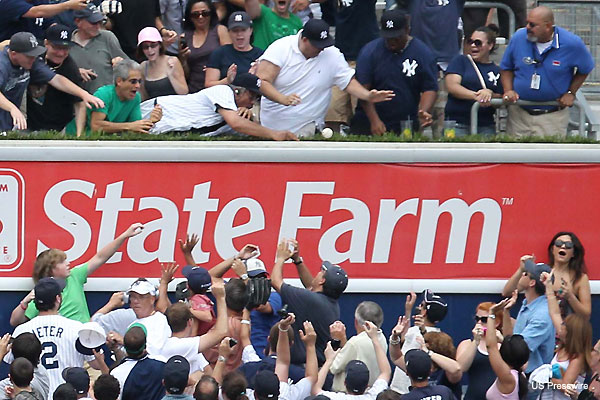
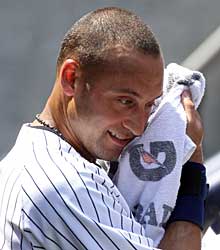
Jeter became the first Yankee to accumulate 3,000 hits in pinstripes when he hit a solo home run off Tampa Bay lefty David Price in the third inning Saturday in the Bronx. Jeter, who just returned after spending three weeks on the disabled list with a calf injury, singled in the first inning for No. 2,999. In his next at-bat, Jeter ripped a full-count slider from Price into the leftfield seats. And despite the recent cyber-trend to disparage Jeter's game and accomplishments, he deserves mention alongside the best to play for baseball's most storied franchise.

Precisely where does he rank? From a poetic standpoint, No. 2 would be the perfect perch. Cue a tape of Bob Sheppard to make the announcement:

"The shortstop, number 2, Derek Jeter, number 2."

Follow us on Facebook and Twitter to read them first!

But that's a difficult case to make. To eclipse every Yankee except Ruth, Jeter would need to bounce back offensively through 2013. He'd need to change positions so his deficient range at shortstop recedes into memory. And the Yankees would need to win two more World Series with Jeter a driving force through those postseasons.

Today, though, Jeter has gained entry into the land of the elite. A Fab Five is now a Sparkling Six.

Here's our list, in reverse order. Class, grace and a certain "Yankee-ness" count. So do stats. Only accomplishments with the Yankees are considered.

It all adds up to "greatness," an admittedly imprecise blend of hard numbers and subjective notions. Cast your vote in ThePostGame.com poll.

6. Yogi Berra

Berra was part of a major league record 10 World Series champion teams, was named American League Most Valuable Player three times and played the most demanding position on the field. He also developed an iconic oracle-like persona with his fractured speech and hilarious yet astute observations. And at 86, he's not only the lone living member of the Sparkling Six besides Jeter, he still wears pinstripes. Berra anchored the team during its late-1940s and 1950s heyday, succeeding Hall-of-Famer Bill Dickey at catcher and playing alongside DiMaggio and Mantle. He has the fourth-highest Wins Above Replacement of any catcher in history.

5. Derek Jeter

Jeter's stature and leadership are unsurpassed. His production in the media hellfire of the Bronx has been phenomenally consistent. His five World Series titles and overall postseason excellence set him apart from other active players. In 2001, his flip of a relay throw to home plate and his walk-off home run in Game 4 of the World Series are among the most memorable moments in Yankees history. Of course he's slipping at 37: Mantle, DiMaggio and Gehrig were retired at that age. Yes, he's made more outs and hit into more double plays than any other Yankee and he'll probably pass Mantle for most strikeouts. One milestone begets others for the player with the most plate appearances, official at-bats, hits and stolen bases. Each category speaks to longevity, durability, toughness and resilience.

4. Mickey Mantle

Like DiMaggio, Mantle retired at age 36. Like Jeter, his defensive skills eroded with age and -- in Mantle's case -- injury. But like Berra, Mantle played 18 Yankee seasons because he broke in at age 19. He and Willie Mays vied for the title of best player on the planet through the 1950s and much of the '60s. The switch-hitting Mantle was AL MVP three times and he led the Yankees to 12 World Series, winning seven titles. He might have had more natural ability than any player ever, but he frittered away some of his talent partying. Who knows the numbers he could have amassed had he not been such a carouser? That question need never be asked of Jeter, who by remaining productive for two more seasons could swap places with Mantle.

3. Joe DiMaggio

The Yankee Clipper was the team's most majestic player, and only Gehrig and Jeter approach his stateliness. DiMaggio's greatest accomplishment is his record 56-game hitting streak. A close second is his nine World Series titles, behind only Berra in Yankee history. DiMaggio's offensive numbers across the board are exceptional per season, but his career totals are lacking because he retired after 13 seasons, at least four fewer than the others on the list, primarily because he missed three years serving in World War II. At age 35 in 1950 DiMaggio had a stellar season that mirrored his career numbers. A year later his performance declined because of nagging injuries and he hung 'em up after helping the Yankees to one more World Series championship.

2. Lou Gehrig

As he was in the Yankees lineup from 1925 to 1934, Gehrig is immediately behind Ruth on the list of Yankee Greats. When the measure is a blend of batting statistics, World Series titles, impact on baseball, impact on New York, larger-than-life persona and unforgettable nickname, The Iron Horse noses out the rest of the pack. Gehrig's greatness was perhaps best displayed after Ruth left the Yankees. Gehrig led the team to three more World Series titles for a total of six, and he batted .361 with a staggering 1.208 OPS in the postseason. His career was tragically cut short at 36 after 17 seasons because of the rare disease that bears his name.

1. Babe Ruth

Besides singlehandedly introducing home run power as the game's most lethal weapon and gate attraction, Ruth also made the Yankees the greatest team in baseball. Before his arrival in New York in 1920, the franchise had a losing record. In Ruth's 15 seasons with the Yankees, and for the next 30 years beyond his departure, they had only one losing season. His career offensive Wins Above Replacement of 143 is easily the franchise best and he holds the trifecta of highest batting average (.349), on-base percentage (.484) and slugging percentage (.690). Ruth won fewer World Series titles with the Yankees (four) than any of the others on this list. But he delivered, hitting 15 homers in 117 at-bats. .


Fan returns 3,000th hit to Jeter, team rewards his generosity

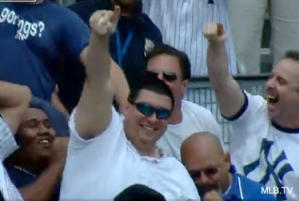
As a 23-year-old cell phone salesman, Christian Lopez had thousands of reasons to hold out for the highest bidder on the baseball from Derek Jeter's 3,000th hit. In fact, some estimates put the ball's worth at $250,000, money that the recent graduate from St. Lawrence University could have certainly used.

And yet when New York Yankees officials found Lopez after he corralled Jeter's historic home run, the only thing that the big Yankees fan wanted was to return the ball to the man who had hit it.

Watch an interview with Lopez on YES

Yes, Lopez was willing to just give away what seemed like a sure lottery ticket

"No, not really," Lopez said when Yankees announcer Michael Kay later asked him if he asked for anything in return. "He deserves this, he's worked hard for this ... I'm not the type of person to take this away from him."

That's a pretty nice gesture, no doubt. But lest you think the Yankees were just going to take the ball away without any compensation, they rewarded Lopez's generosity with a pretty nice package. According to Kay, Lopez will receive four tickets to a suite for every remaining game at Yankee Stadium this season (including any possible playoff games) plus first row Legends Suite tickets to Sunday's game. He will also receive an assortment of bats and jerseys, plus the opportunity to meet Jeter.

Update: And, topping it off, a 5-4 Yankees victory in which Jeter drove in the go-ahead run in the eighth to cap a 5 for 5 day in the batter's box. Lopez was a guest of honor at one the best Yankees games of the season.

Not a bad haul for someone who was at the game on birthday tickets he received from his girlfriend. And while there are going to be plenty of people who question his decision, I'm guessing that the integrity Lopez showed in returning the ball to Jeter is going to benefit him in his life and future career as well.

What would you have done?

Jeter homers for 3,000th hit, goes 5 for 5 in win

NEW YORK (AP)—Derek Jeterhomered for his 3,000th hit and raced right past the milestone in a scintillating performance Saturday, going 5 for 5 with a tiebreaking single in the eighth inning that gave the New York Yankees a 5-4 victory over the Tampa Bay Rays.

Jeter doubled and had three singles while starting a pair of Yankees rallies and finishing off their last one. He bounced a single through the left side his first time up to give him No. 2,999, then sent a no-doubt drive into the left-field seats off Rays ace David Pricein the third inning.

That made Jeter the 28th major leaguer to get 3,000 hits, one of baseball’s biggest milestones, and the first to do it with the Yankees. Former teammate Wade Boggs was the only other player to reach the plateau with a home run.

It also set off quite a celebration in the Bronx, with teammates mobbing Jeter at home plate in a pack of pinstripes before he took a curtain call and saluted the sellout crowd of 48,103. The game was held up for 3-4 minutes, and Jeter also acknowledged the Rays players who applauded from their dugout.

Moments later, a montage of messages from ex-teammates, including Andy Pettitte, was shown on the big video screen in center field. By the fourth inning, the screen showed DJ3K merchandise flying off the shelves at Yankee Stadium souvenir shops.

The home run was Jeter’s third of the season and first at home since an inside-the-park shot July 22, 2010, against Kansas City. But the 37-year-old captain was just warming up in a turn-back-the-clock performance—and the Yankees needed all of it.

Eduardo Nunez, perhaps Jeter’s heir apparent at shortstop, doubled to start the eighth against Joel Peralta) (2-4). Brett Gardner dropped down a sacrifice bunt to push Nunez to third and up stepped Jeter again, looking to cap his big day in style.

Tampa Bay brought the infield in and Jeter poked a two-strike pitch up the middle, giving New York a 5-4 lead and prompting another round of “De-rek Je-ter!” chants.

Mariano Riveragot three quick outs for his 22nd save in 26 chances, his first outing since blowing a save Sunday against the Mets. Rivera was out of action for three days because of a sore right triceps before pronouncing himself available to pitch Thursday night.

Curtis Granderson caught Kelly Shoppach’s long drive at the center-field fence for the second out in the ninth.

Granderson also had an RBI single to drive in Jeter in the fifth, and A.J. Burnett struck out nine in 5 2-3 innings. He left with a 4-3 lead, but Tampa Bay tied it in the eighth against David Robertson (2-0).

Jeter matched a career high with the first five-hit game for any player at the new Yankee Stadium, which opened in 2009.

The last player to reach 3,000 hits, Craig Biggio of the Houston Astros, did it with his third hit in a five-hit game on June 28, 2007.

Jeter’s run-up to 3,000 turned into a winding, drawn-out journey, beginning with a calf injury June 13 that landed him on the disabled list for 20 days.

Six hits shy of the milestone, he returned in Cleveland on the Fourth of July and managed three hits in a three-game series.

Back home Thursday against Tampa Bay, Jeter laced the first pitch he saw for a double but then came up empty the rest of the night, disappointing a sellout crowd that came to see history.

The teams were rained out Friday and settled on a Sept. 22 makeup date because the Rays didn’t want to play a split doubleheader this weekend. That left Jeter with only two more home games to reach the milestone before the All-Star break—the Yankees begin the second half with an eight-game road trip.

Lined up to pitch for the Rays? A pair of aces in Price and James Shields

Pressure on Jeter, even in July? You better believe it.

But he delivered all day, even stealing a base Saturday after entering the game in a 4-for-18 slide.

“Nobody better in the clutch,” said good buddy Jorge Posada the first to greet Jeter with a bearhug after his home run. “He looks forward to that moment and today was a perfect example.”

Before the first pitch, thousands of fans lined up at ticket windows outside Yankee Stadium hoping to get in—even though an electronic sign read: Today’s game is sold out. Many of them were trying to exchange rain checks from Friday night, but there was no room in the packed house.

B.J. Upton(notes) hit a two-run homer for Tampa Bay, and All-Star outfielder Matt Joyce(notes) also went deep. Price lasted only five innings, giving up four runs and seven hits.

Jeter was destined to be a Yankee hero

NEW YORK – The Armitron clock high above the left field stands said 2 p.m. as Derek Jeter’s(notes) 3,000th hit dropped into the seats below. Typical Jeter, always perfect at just the right moment.

Somehow we should have known it would happen this way, with a sellout crowd at Yankee Stadium chanting his name “Dehhhhrick Jetah. Dehhhhrick Jetah.” He had gone nearly a year in this stadium without a home run and then on a Saturday afternoon with everyone anticipating the hit that would seal his Yankee legacy, he drove a 3-2 pitch high toward left field and there was no doubt where the ball would land, his second of five hits on the day. He dropped his head as he always has, trying to stifle the smile that was spreading across his lips. His teammates spilled from the dugout, led by the two he played with the longest here – Jorge Posada(notes) and Mariano Rivera(notes).

With his second hit on Saturday, Derek Jeter became the 28th player – and first Yankee – to reach 3,000 hits.
(Getty Images)

It was as if the whole thing had been scripted from the beginning.

In these times where offensive records seem to fall with regularity, there is still a magic to 3,000 hits. Jeter, the sole Yankee to achieve the feat, is only the 28th player to achieve the milestone and the line of potential candidates to join him in the near future includes just his teammate Alex Rodriguezand Mariners right fielder Ichiro Suzuki. And while Rodriguez is a superior hitter with a real chance to someday own the all-time home run record, his 3,000th hit (which should come in 2013) won’t have the same impact as Jeter’s.

Rodriguez is a representative of his era. He was a baseball mercenary who abandoned his first team to seize the bounty offered him by the Texas Rangers and then manipulated a trade to the New York Yankees after a deal to the Red Sox didn’t work out. There is no sense of loyalty from A-Rod. He is just another great player without a home. And no matter how much he outshines Jeter at the plate and on the field, he will never be beloved here the way Jeter is. Jeter is different. Jeter is immune to the vacillations of the city’s sports fans.

Jeter was born to be a Yankee. And while such a line would come off as a trite cliché if used about any other player, it’s actually true when it comes to him. As a child growing up in Kalamazoo, Mich., he adored the Yankees, who were the favorite team of his grandmother Dot. Each summer he visited his grandparents in New Jersey and Dot would take him to Yankee Stadium where the young Jeter gazed at the giant ballpark around him and dreamed of someday wearing the same pinstriped uniform as the players running across the field below him.

According to the book “The Captain” by Ian O’Connor, Jeter announced to his fourth-grade class that he was going to play shortstop for the Yankees when he grew up. And as he got older the obsession only strengthened. O’Connor’s book portrays the adolescent Jeter as something of a dork when it came to his favorite baseball team. He came to school wearing a Yankees cap with a Yankees pendant around his neck. Former teammates from a travelling basketball team say he even wore Yankees boxers.

It became a source of ridicule among his childhood friends, especially in the Midwest, where all things New York were not beloved. But Jeter never wavered. He forever told his teammates he was going to be a Yankee. And so it was fitting that a Cincinnati Reds official named Julian Mock overruled his scouts and chose a now long-forgotten outfielder named Chad Mottola with the fifth pick of the 1992 draft, leaving Jeter to be picked by the Yankees.

But even after Jeter’s dream came true and he became the Yankees’ shortstop, he played as if he was still that kid back in Kalamazoo wearing his Yankees cap and pendant, playing through injuries that would have sidelined other players. He was forever a constant in New York’s lineup, hitting first or second for most of his more than 16 years with the team. The other day manager Joe Girardi, a former teammate, talked about the comfort of always knowing Jeter would be there. If nothing else Jeter brought consistency to a franchise often embroiled in tumult. Players came and players went. George Steinbrenner raged. The games kept getting bigger and bigger and the only thing anyone could say for sure was that Jeter would be at the top of the lineup, playing shortstop and lining singles to right field.

He is not the player he was. He came into the game hitting .257, his range at shortstop diminished with age. In recent days, as the attention intensified, he tried to smile but also looked weary. When he led off Thursday’s game against Tampa Bay with a double, he seemed hopeful two more would come that night, getting him to 3,000 and ending this chase. Failing to do so disappointed him.

“Sure I want it to be over,” he said on Friday afternoon before that game was rained out.

Then on Saturday, with a blue sky dotted with puffy white clouds as if the afternoon had been painted by Norman Rockwell, Jeter delivered as only he has all these years. He hit a single to left in the first inning and came up in the third to an enormous roar from a crowd that sensed something big. As soon as his bat made contact with the changeup from Rays pitcher David Price(notes), the crowd began to scream. Jeter, the kid from Kalamazoo who longed to be a Yankee, did exactly what would be expected of a Yankee in such a situation. He dropped his head and ran. He was already to first base when the ball finally disappeared into the seats.

Just like Jeter. As if this was going to happen any other way. The perfect moment from the perfect Yankee.

Friday, July 08, 2011

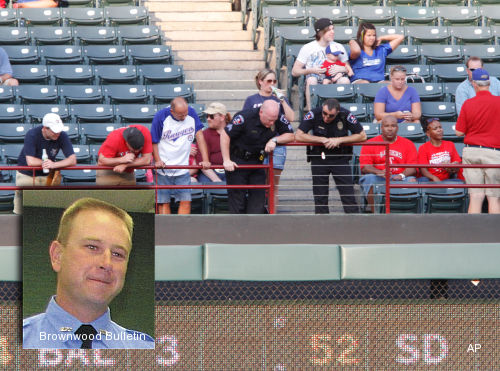
Rangers fan dies after falling over fence at Rangers Ballpark

G.J. McCarthy / Staff Photographer
Players and fans look on after a man fell trying to catch a baseball during the Texas Rangers game against the Oakland Athletics Thursday, July 7, 2011 in Arlington.


Man was reaching for ball tossed into stands by player


A fan reaching to catch a ball died after he fell over the left-field wall at Rangers Ballpark in Arlington during the second inning of Thursday night’s game.

The man had been reaching over the rail for a foul ball tossed into the stands by Rangers left fielder Josh Hamilton during the game against the Oakland A’s.

The city manager of Brownwood confirmed that the man, Shannon Stone, was a firefighter there, the Brownwood News reported late Thursday.

Stone, who was sitting in the left-field lower-level reserved seats, fell about 20 feet in the area behind a wall supporting a scoreboard.

“We are deeply saddened to learn that the man who fell has passed away as a result of this tragic accident. Our thoughts and prayers are with his family,” said Nolan Ryan, Rangers CEO and president.

It is routine for players to throw balls that are out of play into the stands.

“As anyone would be, Josh is very distraught about this, as the whole team is,” Ryan said.

Stone was treated by Rangers medical personnel before being taken to John Peter Smith Hospital in Fort Worth.

The Rangers’ TV broadcast did not show the incident, but the A’s broadcast did, returning to it during a break in the action on the field.

Ronnie Hargis was sitting next to Stone, who was at the game with his young son. The men had been talking to each other before the accident.

“He went straight down. I tried to grab him, but I couldn’t. I tried to slow him down a little bit,” Hargis said.

Witnesses said the victim’s head was bleeding badly.

David Dodson was at the game with his daughter and saw the fall.

“Just as the ball hit his hand, it kind of threw him off balance and he just went head-first,” Dodson said. “It looked awful because you knew there was no way he was going to land on his feet. … The way he fell, it looked like it was just straight on his head.”

Oakland relief pitcher Brad Ziegler said he thought Stone was going to be OK after the fall because he was telling medical personnel to “please check on my son up there.”

Rangers manager Ron Washington said several players saw the incident unfold. The Rangers played the rest of the game, winning 6-0, without knowing the spectator had died.

“We knew about it, but we didn’t know exactly what had happened,” he said.

On July 6, 2010, a fan plunged 30 feet from the upper deck at the stadium while trying to catch a foul ball during a game between the Rangers and the Cleveland Indians.

That man, 25-year-old Tyler Morris of Rio Vista, landed on several people below, suffering a fractured skull and a sprained ankle.

Ryan said after last year’s accident that he thought the stadium’s railing heights were adequate.

“The ballpark was built above specs, and we feel good about that,” Ryan said.

In 1994, 26-year-old Hollye Minter of Plano fell 35 feet from the upper deck during the home opener against the Milwaukee Brewers.

Minter suffered fractured vertebrae, broken ribs and teeth, and shoulder and leg injuries.

After that incident, the Rangers raised some of the stadium’s railings and added warning signs.

Staff writer Gerry Fraley, WFAA-TV and The Associated Press contributed to this report.

Man dies after falling out of stands at Rangers game

This kind of thing isn't supposed to happen at the ballpark.

But it has.

A man attending a Texas Rangers game with his young son died after falling out of the left-field stands and about 20 feet to the ground Thursday night.

He was trying to catch a ball flipped into the stands by Rangers outfielder Josh Hamilton but apparently lost his balance and fell head-first in a space between the 14-foot outfield fence and the grandstand near the Oakland Athletics bullpen.

"We had a very tragic accident tonight and one of our fans lost their life reaching over the rail trying to get a ball," team president Nolan Ryan said. "As an organization, and as our team members and our staff, we're very heavy-hearted about this, and our thoughts and prayers go out to the family."

The Brownwood (Texas) Bulletin identified the man as Shannon Stone, a lieutenant in that town's fire department and a fireman for 18 years.

The accident happened in the second inning after Oakland's Conor Jackson hit a foul ball that bounced back onto the field.

Horrifying TV replays from the Oakland broadcast show Stone positioning himself to catch Hamilton's throw, then tumbling over a railing as his young son watched. A man next to Stone tried to hold onto him, but couldn't.

It's the second fatal fall at a major league ballpark this season. In May, a fan at Coors Field fell down a stairwell and died. Also, last July at Rangers Ballpark, a fan fell 30 feet from the second deck of seats while trying to catch a foul ball and suffered a fractured skull and sprained ankle.

Ryan said Hamilton and the rest of the club were made aware of what happened.

"We spoke to the ballclub, they understood what has happened and we spoke to Josh," Ryan said. "I think as any of us would be, Josh is very distraught over this, as the entire team is."

What must be going through the mind of not only the boy, but also Hamilton? Obviously, what happened wasn't his fault but it would only be human nature to feel guilty. And, as most fans realize, Hamilton is quite human.

The other players were taking it hard as well:

Athletics reliever Brad Ziegler was in tears after the game when he found out the man had died.

"They had him on a stretcher. He said, 'Please check on my son. My son was up there by himself.' The people who carried him out reassured him. 'Sir, we'll get your son, we'll make sure he's OK,"' Ziegler said. "He had his arms swinging. He talked and was conscious. We assumed he was okay. But when you find out he's not, it's just tough."

This has to be the saddest possible event at a baseball game. A man goes to a ballgame with his son — it's the ultimate American experience — and he dies trying to catch a ball. It's hard to comprehend.

As for the need to raise the railings, or not throw balls into the stands ... that's the crazy part. How many thousands of games happen where nobody gets hurt, and now this?

Maybe more cogent thoughts will come to me in the morning.

Fan dies after falling from stands at Rangers game

ARLINGTON, Texas (AP)—A man attending a Texas Rangers game with his young son died after falling out of the stands and about 20 feet to the ground while trying to catch a baseball tossed his way Thursday night, the Rangers and Arlington fire officials said.

Arlington Fire Department officials said in a statement that another fan nearby tried unsuccessfully to grab the man to keep him from falling. They said the victim’s son did not fall.

“We had a very tragic accident tonight and one of our fans lost their life reaching over the rail trying to get a ball,” team president Nolan Ryan said. “As an organization, and as our team members and our staff, we’re very heavy-hearted about this, and our thoughts and prayers go out to the family.”

A very somber Ryan didn’t get into details about the accident or release the man’s name.

Ronnie Hargis was sitting in the stands at Rangers Ballpark next to the victim. The men were talking to each other before the accident.

“He went straight down. I tried to grab him but I couldn’t,” Hargis said. “I tried to slow him down a little bit.”

TV replays showed the man falling head-first and landing behind a 14-foot-high wall supporting a video board for replays and scores. The area where the man fell is out of sight from the field.

It is the second fatal fall at a MLB ballpark this season. In May, a 27-year-old man died after he fell about 20 feet and struck his head on concrete during the seventh inning of a Colorado Rockies game. Witnesses told police that the man had been trying to slide down a staircase railing at Coors Field and lost his balance during a game against the Arizona Diamondbacks.

The accident in Texas occurred in the second inning after Oakland’s Conor Jackson hit a foul ball that ricocheted into left field. Josh Hamilton, the reigning AL MVP, retrieved the ball and tossed it into the stands. Replays on Oakland’s television broadcast show the man reaching for the ball and apparently catching it before tumbling.

“We spoke to the ballclub, they understood what has happened and we spoke to Josh,” Ryan said. “I think as any of us would be, Josh is very distraught over this, as the entire team is.”

The Rangers clubhouse was closed to reporters after the game.

Replays on Oakland’s television broadcast show the man reaching for the ball and apparently catching it before falling.

The visitor’s bullpen at the stadium is in left-center field. Athletics reliever Brad Ziegler was in tears after the game when he found out the man had died.

“They had him on a stretcher. He said, ‘Please check on my son. My son was up there by himself.’ The people who carried him out reassured him. ‘Sir, we’ll get your son, we’ll make sure he’s OK,”’ Ziegler said. “He had his arms swinging. He talked and was conscious. We assumed he was okay. But when you find out he’s not, it’s just tough.”

There was an audible gasp in the stands when the man tumbled over the rail, eerily similar to an accident last July when a man fell about 30 feet from the second-deck of seats down the right-field line while trying to catch a foul ball.

Before the Rangers batted in the second, manager Ron Washington spoke briefly with one of the umpires. Michael Young, who was leading off the inning, could be seen talking to A’s catcher Kurt Suzuki and pointing toward the area where the previous accident happened.

Former president George W. Bush was sitting in the front row with Ryan near the Rangers when the accident happened. Ryan left moments later while Bush remained in the seats.

Ryan said the former president, who used to be the team’s managing general partner and is a frequent visitor to Rangers games, was aware of what was happening.

Hargis’ daughter said the victim’s head was bleeding badly.

Safawna Dunn, who was sitting behind the victim, said he appeared to have injuries to both arms and was conscious when taken away on a stretcher.

“Josh Hamilton tried to throw (the ball) up to the guy because they were yelling for the ball,” Dunn said.

Last July at Rangers Ballpark, a fan fell 30 feet from the second deck of seats at Rangers Ballpark while trying to catch a foul ball. That fan, Tyler Morris, suffered a fractured skull and sprained ankle.

After Morris was hurt last year, he called the incident a “100 percent, total accident that could have happened to anybody.” He said he didn’t blame the Rangers or the ballpark.

Ryan said it was too early to talk the two accidents and what evaluations the team might make about railings at the stadium.

“Tonight, we’re not prepared to speak about anything further than the accident and the tragedy,” Ryan said. “That’s where I’m going to leave it.”

AP freelance writer Ken Sins contributed to this report.

Tuesday, July 05, 2011

Opinion
July 4, 1939 -- ALS, Lou Gehrig and Me

By Fay Vincent

On July 4, 1939, at Yankee Stadium, before a full house, Lou Gehrig stood in front of a microphone and announced he was “the luckiest man alive.” His somber teammates were lined up behind their captain and stellar first baseman. One of them, Tommy Henrich told me Gehrig had not planned to speak but changed his mind and broke the hearts of all who heard him. Henrich never forgot seeing Babe Ruth crying openly when he came over to hug Lou after the brief talk.

Just a few months earlier Gehrig had been forced to break his remarkable record of consecutive games when his powerful frame began to fail. His speech is still well known as the defining act of a remarkable baseball legend. Gehrig’s talk was emotional because everyone knew he was seriously ill—fans were told he had a form of “polio”-- and though his disease was then not as well understood as it is today, the public and his teammates knew he was not ever going to play again.

When he died a few years later, the disease-- amyotrophic lateral sclerosis-- was named and is still known as “Lou Gehrig’s disease.” Ever since then, baseball and that debilitating disease have been closely linked.

My school classmate and friend Franz Opper was born on that Fourth of July in 1939 and many years later, in the midst of a busy career in Washington as an official at the SEC and on the staff of Congress, he learned he had ALS.

He and his wife Barbara stoutly confronted the illness and for many years Franz kept up a lively correspondence with me in which his letters never betrayed his declining health. When I was elected baseball Commissioner the letters took on a baseball flavor as Franz began to give me baseball advice. The letters were fun to read, full of wit and wry comments. And then came one with a serious request.

Franz asked me to try to arrange for him to come to Yankee Stadium for one final baseball game. He and Barbara knew their request was a challenge in light of what had become by then his complete disability. He was totally inert on a respirator unable to move any part of his body. He could only blink. He was able to communicate as his nurse help up the alphabet and pointed to the letters in turn until he blinked at the one he wanted to use to spell out a word. His letters were the product of determined and tedious effort.

I agreed to try to help and turned to George Steinbrenner the owner of the Yankees for assistance. And here comes a story about George that is witness to his generosity to those with acute needs. When I explained what Franz had asked and the many complexities the Yankees organization and I would have to face if we were to proceed, George was immediately supportive. “It is not going to be easy for us and him,” he responded, “ but we will help all we can.”

That was all I needed and with the deft cooperation of the Yankees, we brought Franz to a final game at the Stadium. His bed had to be tilted so he could see the field from the owner’s office Steinbrenner had made available but somehow we managed. The logistics effort was considerable but the touching letter I later received from Franz made it all worthwhile.

When I called George to thank him, he shrugged off my profuse appreciation –“I am glad it worked out for him.” I had the sense he was a bit embarrassed by letting me see his gentle side. This was not as well-known as the tough guy side. But I never forgot what he had made possible for my friend Franz.

Not long after the baseball visit, Franz died. He had endured many years of total paralysis, but never lost his good cheer.

It is impossible not to think of Franz when I see a tape of that memorable Gehrig speech at Yankee Stadium on the day he was born.

Interestingly, George Steinbrenner was born on the fourth of July as well.

It is often said baseball brings generations together. In baseball, Franz, George and I came together briefly. On this Fourth of July I will remember them and Gehrig and ALS. Presiding from the poet-- Life like baseball is a series of tragedies separated by times of sheer joy.

Fay Vincent is a former CEO of Columbia Pictures Industries and from 1989-92 served as the Commissioner of Baseball

Monday, July 04, 2011

Thanks Runs Forever” — Korean War Photo Exhibit in Daejeon

There’s a Korean War photo exhibition outside Daejeon Train Station which thanks the 67 UN member governments that supported the Korean War (16 nations sent troops to Korea; another 5 provided medical assistance).

This is a period of remembrance, this past Saturday was the 61st anniversary of the start of the Korean War and next Tuesday is the 61st anniversary of The Battle of Osan and Task Force Smith. Next month, on July 27th is the anniversary of the Armistice.

It was something to see all these flags flapping in the breeze today as well as all the photographs of significant moments during the war (with English and Korean captions).

Friday, June 24, 2011

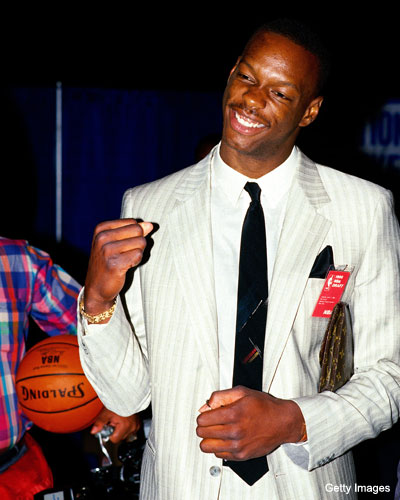
The drafting of Len Bias: An oral history


By Kirk Minihane

"Share
Twenty-five years later, the drafting of Len Bias remains a hot topic among Celtics fans. (AP)

Twenty-five years later, the drafting of Len Bias remains a hot topic among Celtics fans. (AP)

We all know what happened after the Celtics drafted Len Bias.

The death of Bias has virtually turned into an industry. Documentaries, magazine articles, Internet sites and even books have covered the subject to the point where it seems that there is nothing left to say or write. Everybody knows what happened and what it meant to the Celtics and the NBA.

But in this oral history, we instead decided to focus on how the Celtics -- just a couple of days removed from winning an NBA title -- were able to draft Len Bias on June 17, 1986.

It all started in October of 1984. The Celtics were four months removed from their 15th NBA title, and were -- at the very worst -- co-favorites win again in 1984-85.

--

Jan Volk, Celtics general manager (1984-97)

We had won a championship. Gerald Henderson had started with us -- he and Dennis [Johnson] were our starting backcourt. Danny was our third guard. And now Gerald's contract was up. He wasn't holding out in the sense that he had a contract, he didn't have a contract, we just couldn't agree on a contract. About halfway through training camp, we did in fact reach agreement on a contact which was in large part close to what we had been offering. We had our best offer out there and weren't going to be able to do much with it.

Gerald Henderson, Celtics guard (1979-84)

It was pretty much the same stuff everyone goes through with contracts. We wanted more money, they didn't want to pay. We came to agreement, and Jan Volk decided that he wanted to move in another direction after we signed that contract.

Jan Volk

Gerald came in during the course of training camp and one of the things that we saw in that context was that Danny [Ainge] played better as a starter, both better than he had as a third guard and better than Gerald. We envisioned that they would probably switch spots, with Gerald coming in as a backup, though to say just a backup role minimizes it.

Gerald Henderson had just finished his fifth season in the NBA -- all with the Celtics -- and 1983-84 was his most productive year, as he set career highs in points per game (11.6) and assists per game (3.8). A very nice role player on a championship team? Sure. But at age 29, it was clear that he wasn't going to be more than that and the Celtics knew it. But they weren't looking to trade him until the phone rang a couple of days after inking Henderson to a three-year, $900,000 deal.

Jan Volk

We signed Gerald on a Thursday, very late in the day on Thursday [Oct. 11, 1984]. The team was in Texas playing two games on the road. Gerald met the team in one of those cities, played the weekend games, I don't know. On Monday, during the day, I got a call from an Eastern Conference general manager, someone I knew quite well.

He asked, 'So what did you finally sign Henderson for?' And that is information that he could get, and I told him. He said, 'That's a very fair contract.' I told him I thought it was right. He said he saw how well Ainge was playing and if we were willing to move Henderson they'd give us a first-round pick for him. I said, well, OK, thanks.

I'm thinking, wow, a first-round pick, that's pretty good. If we decide that's what we want to do, in terms of moving him to a third guard, that might be a pretty good thing to consider. I immediately got Red, K.C. Jones and Jimmy Rodgers on the phone on a conference call and we all agreed that this was something that we should pursue. But not with them, we didn't want him in our conference.

Pat Williams, 76ers general manager (1974-86)

Gerald Henderson was a nice player and very nice young man. But I'm not sure -- at that point in his career -- he was worth a first-round pick, at least not where the pick turned out to be.

Jan Volk

The question was: Where could he could go that he could be out of conference and with a team where the draft pick is going to be meaningful in the next year or two?

We were now in the fall of 1984, I went to two clubs -- Seattle was one, I'm not going to tell you the other, that were also in the Western Conference and we felt had a good chance of being in the lottery and being a quality pick.

We got offers from both of them -- I got offers from Seattle and the other team -- and they both offered a first-round pick. One offered it in 1986 and Seattle initially offered it in 1987. I would have taken the 1987 pick with Seattle because they looked like they were going to be less successful in the next two years, but they were more likely to be good in two years than in one year, we could predict one year with better certainty. So I really wanted the 1986 pick, so if we had the 1986 picks of both teams I was going to take Seattle. So if Seattle offered us the 1987 I was probably going to go with the other team. I told them that, gave them a chance to think about it.

Five minutes later they came back and said they would give us the '86 pick.

That conversation [with the Eastern Conference GM] came in on a Monday. I think the trade was done on Tuesday.

Gerald Henderson

I was very disappointed to be traded. I felt a bit betrayed. I signed a contract and thought I was going to have a nice, long relationship. I thought I was going to be part of the organization. I guess Volk thought he was going to be a hero.

So it was the SuperSonics, a team that was five years removed from an NBA title and at the time of the Henderson deal were coming off of a 42-win season and first-round playoff loss to the Mavericks.

Glenn Walker, SuperSonics beat writer, Seattle Times (1982-99)

This was a team in a complete state of flux. They had an NBA title in 1979, and had stayed with that group way too long.

The Sonics won 31 games in 1984-85, Henderson's first season with the club, and suddenly the first-round pick a year away looked to have a real shot of being a lottery selection.

Jan Volk

We started looking at a more elite group of players with the expectation that we might act upon them.

Gerald Henderson

The culture in a winning organization is so different from one in a losing organization. Just the way people are, they way they think about things. It was just different in Seattle. It wasn't the same. Even the referees treat you differently. It was night and day.

Jan Volk

We looked at the SuperSonics every day [during the 1985-86 season]. Every day. We tracked them, I was very interested in them. Ownership would also do the same.

Glenn Walker

I do remember it being tumultuous. Lenny Wilkens had lost control of the team the year before [1984-85 was the last year for Wilkens as head coach of the SuperSonics. He moved to the GM position in 1985-86 and Bernie Bickerstaff took over as coach].

In 1986 it just all went in the shi--er. They were really unathletic, slow, unentertaining.

When you look back on the trade, I think they were looking for a fix, which Henderson obviously wasn't.

Jan Volk

He was a starting guard on a championship team and there's a lot of cache that goes with that.

Glenn Walker

Franchises can spin things any way they want, you know? I think they were trying to bring him in as incoming hero, he just won a championship. Gerald Henderson just wasn't that player.

Jan Volk

Maybe we win the 1985 championship if he plays, I don't know. Who knows? Quinn [Buckner] didn't play well, we brought in Ray [Williams] and we was very good at times and not so good at times. Kind of what the knock on him was everywhere else. Inconsistent.

Gerald Henderson

I can't say if I was missed or not, but I do know that they didn't repeat as champions the next year.

The SuperSonics finished the 1985-86 season with a 31-51 record, second-worst in the Western Conference. That meant the lottery for the Celtics and the chance to land one of the elite college prospects, a group that most felt included Brad Daugherty of North Carolina, Chris Washburn of North Carolina State, William Bedford of Memphis State and Len Bias, a forward from Maryland and former counselor at Red Auerbach's basketball camp.

If the Lakers were now the main rival of the Celtics, the Sixers still weren't far behind. And thanks to a 1979 trade with the Clippers that sent Joe Bryant (yup, Kobe's dad) to San Diego for a 1986 first-round pick, the Sixers were another playoff team with a spot in the lottery.

Pat Williams

There we sat. They kept pulling those cards and it came to Boston and Philly, the two rivals. And they pulled the Boston card and I prevailed. I remember my greatest joy was finally over and I could get away from under the cloud of Red's cigar smoke. I was about to choke, so I took a deep breath and chipped a tooth.

Jan Volk

We were very happy, we knew that we were going to get an impact player. There were two impact players, and we knew that we were going to get one.

Pat Williams

It was a funny draft. Brad Daugherty was the big guy, but there were questions about him. Was he tough enough?

Jan Volk

The word was that he was soft. And that was only because of the way he looked and it turned out to be wrong.

Rick Weitzman, Celtics scout (1982-97)

I have to admit that I did [think Daugherty was soft] to a degree. North Carolina's system was a lot different than anybody else. It was tough to tell how good a North Carolina player would be at next level, the system hid a lot of things.

The Celtics liked Daugherty, thought he would be a solid NBA center, and would have been content if he was the best player available at the No. 2 spot. But it was Bias who was the player the Celtics -- a franchise still run by Red Auerbach -- coveted.

Jan Volk

We knew Bias, he was very well known. It gives way too much credit to our strategic planning to suggest that when we made the trade in October of '84 we knew that Bias would our guy in June of '86. We couldn't have known that.

Rick Weitzman

Bias was a counselor at Red's camp. We had seen him often. Red had a relationship with [Maryland basketball coach] Lefty Driesell. Now, it's a lot different than today. Fewer scouts, the technical resources were not there, It was just a different process back then.

Jan Volk

Bias liked to play, he played really hard, and he was downright mean. Just a mean player. If you looked at Daugherty being soft -- which he wasn't -- this guy was the antithesis. He was hard as a rock, tough. If you go back and look at our scouting reports you will see a number of characterizations comparing him to Michael Jordan. Now Michael Jordan had not reached the iconic stature that we know now, this was after two years. The characterization was: Michael Jordan, only bigger, with a better outside shot and doesn't go to the hoop quite as well.

Rick Weitzman

He was a unique as a player. Bias was so gifted athletically, 6'8 with that body, athletic, could jump, could play inside and top it off with that he had a very, very good perimeter game. He was the whole package physically, an incredible skill level. He just did all the things on the court that you wanted a player to do.

Paul Williams

We knew how talented Bias was, there was a lot of potential with him.

But the Sixers never brought in Bias for a pre-draft workout, a scenario that would seem impossible today. In fact, Daugherty -- a player they were admittedly cool on -- was the only player who worked out for the Sixers.

Why?

Pat Williams

Jack McMahon was our longtime scout. I said to him, 'What about Bias? Should we bring him in?' He said no. He said he wouldn't draft him. I said, 'Really, we won't consider him?' He said no. I said, 'Jack, tell me why.' He said, 'There's something about him that bothers me.' That was all he would say.

Jan Volk

That surprises me. I'm surprised that they didn't look further. If they were not interested in Bias, it's kind of an interesting position given that Bias was a very intriguing player. I wonder if they knew more than they were saying.

Pat Williams

For us, it was the wrong year to win the lottery. It was just a different field and we could not get comfortable. And we leaned so heavily on Jack, he was our eyes and ears. He just didn't like Bias and none of us were enamored with Daugherty.

Jan Volk

Now, when we got the No. 2 pick, we immediately concluded Bias was our guy. If we had the first pick we would have taken Bias. Red at the forefront had decided that we were going to take Bias regardless of we had the first or second pick.

Rick Weitzman

Red would have said Bias and that was all that mattered. None of us had any objections to taking Bias, and none of us spoke negatively about Bias at all. And Red wanted to hear what you had to say, whether it was positive or negative about any player.

Jan Volk

Larry [Bird] was thrilled with the idea of playing with Bias. He thought that would extend his career. And it probably would have. Bird saw him at camp, he knew what he was. Larry was very astute. I know Larry thought that was a really good short and long-term opportunity for the Celtics and that the short term was going to benefit him as a player.

Larry Bird, Celtics forward (1979-92)

The two college players that I can remember Red talking about were [Ralph] Sampson and Bias. He really thought Bias was going to be great. Maybe he would have been.

Jan Volk

We didn't bring Daugherty in [for a pre-draft workout]. We did not bring Daugherty in because Dean Smith did not want him in Boston. We did not have -- this was the era of salary cap, there was no rookie scale, a rookie could only get a minimum unless you were under the cap, and Dean Smith wanted Daugherty to go to a team that was under the cap so he could get money immediately. And we were not in a position to do that. We would have still drafted him if Bias had been picked, it would have changed the dynamic.

There was a hard white snow falling on the NBA by the late 1970's. And as much as Bird, Magic Johnson, Michael Jordan and the "NBA: It's Fantastic" ads changed the public image of the league, cocaine was still very much a factor in the NBA. And the cocaine era was about to be defined by the Class of 1986.

Gerald Henderson

In the 1980's, drugs were everywhere. And not just in the NBA or with the Bias stuff, it was all over the country. The Bias incident wasn't something that just appeared out of nowhere.

Pat Williams

Now we are deep in the drug draft. Here comes Chris Washburn, here comes William Bedford, here comes Roy Tarpley. And as it turns out, Bias. It was a very scary group. In those days we weren't up to date on the drug thing, it was still very early. As NBA people we didn't understand it at all. If we did, none of those people would have been drafted.

We sat at meetings and discussed all the players. Washburn, Bedford, there were so many rumors all around those guys. There was just a haze around them. And we were naive, we didn't know what it all meant. But we knew that there was something going on with those guys that wasn't good. So we just passed.

Jan Volk

We brought Bias in, worked him out, we gave him a physical, we gave him a drug test. We were at that point where we were doing that. It was the first year we did it, as I recall. As it turns out, we violated the CBA in doing so. Unintentionally.

Yes, he passed. I'm not going to get into that. But Bias passed the drug test. I don't think you'll find anybody who said they knew there were drugs.

Wayne Embry, Pacers consultant

We saw Bias play, he was a terrific player. Some of his character issues were a concern. We had heard about character issues, so Indiana had no interest in him.

Pat Williams

Chuck Person was out. We had Barkley there, he had been at Auburn with Person and we had heard the two didn't get along all that well. We passed on Person.

Jan Volk

We weren't interested in Kenny Walker. He went fifth, which was really high.

Rick Weitzman

Again, things were not the same back then as they are today in terms of the [drug] situation, but we were well aware of the stuff surrounding Washburn.

The Celtics elected not to bring in Roy Tarpley or Chris Washburn for pre-draft workouts, but did bring in center William Bedford, who had led Memphis State to a Final Four in 1985 and averaged 17.3 points, 8.5 rebounds and three blocked shots a game in 1986.

Jan Volk

We did bring Bedford in, and reached the same conclusion with him (as with Washburn). I'm not going to get into the details. One, I don't remember them well enough to do justice, and two I'm not going to disparage them.

So the Celtics were done. It wasn't going to be Kenny Walker, or William Bedford, or Chris Washburn or Roy Tarpley. They wanted Bias. The Sixers, though, were about to throw a massive curveball. This was a team, remember, that won 54 games in 1985-86, with Charles Barkley as an emerging superstar and Moses Malone -- a season removed from First-Team All-NBA and still only 30 years old -- coming off a 23-10 season. They seemed to be in a similar situation to the Celtics, a chance to use a lottery pick to add a nice price for the future while staying relevant in the title picture.

But the Sixers instead elected to completely change the look of the team, making two trades the night before the draft that ultimately served as the domino that sent the franchise on a decade and a half path of mediocrity.

After turing down an offer from the Pistons of Bill Laimbeer, Vinnie Johnson and Kelly Tripucka for Moses Malone and the No. 1 pick, the Sixers traded Malone -- who had finished 10th in the MVP voting in 1986 -- 1985 first rounder Terry Catledge and a pair of future first rounders to Washington for Jeff Ruland and Cliff Robinson.

And just a few minutes later the Sixers made the Moses Malone deal, they traded away the pick they were could never get comfortable with.

Pat Williams

No one was sold on Daugherty. Turned out we were wrong on that. But we had a chance to get Roy Hinson, who looked like a very, very solid NBA player So we pulled the trigger, sending the pick to Cleveland for Roy Hinson.

Mike Bruton, 76ers beat writer, Philadelphia Inquirer (1982-2001)

As a reporter, I'm sitting there trying to evaluate why Pat Williams and Jack McMahon -- who was a very good personnel guy -- would they go with this gut feeling type thing. That Daugherty was soft. That was the off the record thing they kept saying. That he was soft. It's too vague.

Pat Williams

Don't forget that Cleveland kicked in $800,000, which appealed very much to our ownership group.

Mike Bruton

I think the financial part was almost a fig leaf, almost a 'look at what we did' because of the displeasure of not keeping Brad Daugherty. The fans were really unhappy about that. I don't the team was in any financial distress, and they knew that the trade was a controversial move.

Pat Williams

At least Hinson -- this was our thought -- had played a couple of years, was a proven NBA player, he was 24 years old. So we went that way. Turns out he was injury prone and never did much for the 76ers.

Jan Volk

Very surprised, I was very surprised, I think Red was very surprised. I remember that morning being quite concerned that it was done specifically to jump over us and get Bias.

Rick Weitzman

We were pretty certain that if Philly had gone first pick they would have gone with Daugherty. I remember the morning of the draft, I talked to Red, asked him what happens if the Cleveland takes Bias. He told me that we would take Daugherty and that solves that.

Wayne Embry

I had already agreed to take over [as Cavaliers GM] job after the draft. There wasn't going to be a conflict [with the Pacers] because we had the fourth pick and Cleveland had the eighth pick. So I called Cleveland and told them I wouldn't participate in the draft. But later that evening, [Cavaliers owner] Gordon Gund called and said that they were in the process of possibly obtaining the first pick in the draft with a trade with Roy Hinson. Later that night or the next morning, I was asked who we should take. I told them it had to be Brad Daugherty. There were questions in the room, maybe it should be Len Bias. I said 'draft Brad Daugherty, he's the best player in the draft.'

Jan Volk

Red picked the phone up that morning and called [Cavs GM] Harry Weltman in Cleveland to find out what he was planning to do. Weltman said, 'We're picking Daugherty.' I can't say this with complete certainty but I think Red said -- with a little smile -- 'That's exactly what I would do too. I understand.'

Madison Square Garden hosted the 1986 NBA Draft on June 17. TBS covered the event, and both Marty Blake -- the Director of Scouting Services for the NBA -- and Georgetown coach John Thompson (a close friend and former player of Red Auerbach's) both predicted on air that the Celtics would draft William Bedford, not Bias.

After the the Cavaliers picked Daugherty, Red Auerbach called the Celtics representative at Madison Square Garden. And just a minute later, David Stern made the announcement.

The Boston Celtics select Len Bias, from the University of Maryland.

Jan Volk

What better situation for someone to come in as the second pick in the draft? To come in and play with a team that just won the championship and looking to him to come in and be a transition to the future. It was the perfect situation.

He wanted to be here, he really wanted to be here.

The life and loss of Len Bias, 25 years later

The life and loss of Len Bias, 25 years laterTwenty-five years ago, the Boston Celtics lucked into the second overall pick in the NBA Draft, even after coming off a championship season with a team that many consider to be the greatest of all time. They used the pick to select Maryland's Len Bias, who died two nights after the draft following a cocaine overdose. It's been 25 years, and his story won't ever stop being as sad as it was the night of his death.

Boston's front office took advantage of a desperate Seattle SuperSonics club that overrated fringe Boston starting guard Gerald Henderson(notes), dealing the off guard to Seattle for a lottery pick that ended up ranking second just behind Philadelphia's top overall pick. Philly was no slouch itself, three years removed from a championship, and it lucked into the top pick in the draft as a result of a seven-year old trade that dealt Joe "Jellybean" Bryant (Kobe's father) to the Los Angeles Clippers. And this is all just four years removed from the Los Angeles Lakers trading their way into taking James Worthy first overall, coming off of their own championship. In 1986, the rich were getting richer.

The rich, in 1986, were also using their riches on copious amounts of recreational drugs, and the NBA and its newest draftees were not immune. Bias could have been the link to several more Boston championships, or (far less likely) he may just have been a another nice player on Boston's roster. Whatever the NBA outcome, the loss of the young man was unnecessary, and 25 years later it's still a heartbreaking tale to reflect back upon.

But moving through the heartbreak, WEEI's Kirk Minihane has put together a must-read oral history detailing the lead-up to the Bias draft, and the fallout that came after Len's needless death. There's too much great stuff here to slough off with one pull quote, but I should offer one surprising anecdote from the era, one that saw the team with the top pick pass on even working out one of the top prospects available, in a draft that had a clear but not obvious first overall selection in Brad Daughrety.

From the piece:

But the Sixers never brought in Bias for a pre-draft workout, a scenario that would seem impossible today. In fact, Daugherty -- a player they were admittedly cool on -- was the only player who worked out for the Sixers.

Why?

Pat Williams

Jack McMahon was our longtime scout. I said to him, 'What about Bias? Should we bring him in?' He said no. He said he wouldn't draft him. I said, 'Really, we won't consider him?' He said no. I said, 'Jack, tell me why.' He said, 'There's something about him that bothers me.' That was all he would say.

Jan Volk

That surprises me. I'm surprised that they didn't look further. If they were not interested in Bias, it's kind of an interesting position given that Bias was a very intriguing player. I wonder if they knew more than they were saying.

Pat Williams

For us, it was the wrong year to win the lottery. It was just a different field and we could not get comfortable. And we leaned so heavily on Jack, he was our eyes and ears. He just didn't like Bias and none of us were enamored with Daugherty.

There's a lot of that in this piece. Wayne Embry, then working as a consultant for the Indiana Pacers, also pointed out that Indiana didn't even consider trading up for nor drafting Bias had he fallen to them at the fourth spot in the draft. Bias wasn't regarded as a head-case, or someone dealing with noted drug issues. He even passed what was an illegal drug test with the Celtics prior to the draft. But there were whispers, and rumors.

And, in the days following the draft, the passing of a potentially great player and person that resonates to this day.

Put down the mock drafts, on this Thursday, and take in Minihane's documentation. You'll be glad, if also sad, that you did.